2026-09-15
Nural Choudhury
Sacred geometry treats certain geometric forms and proportions, among them the golden ratio, the Platonic solids, and the Flower of Life, as evidence of a divine or cosmic order laid over mathematics that is otherwise plain and checkable.
These forms recur across centuries and cultures: Egyptian temple proportion, Greek philosophy, Islamic ornament, Hindu and Buddhist meditation diagrams, Gothic cathedrals, and Renaissance painting. Tessellation and pattern systems study the same circle construction, symmetry, and tiling mathematics without the metaphysical claim, so a lattice of overlapping circles counts as sacred geometry the moment someone asserts it carries cosmic significance, and as tessellation the moment they stop.
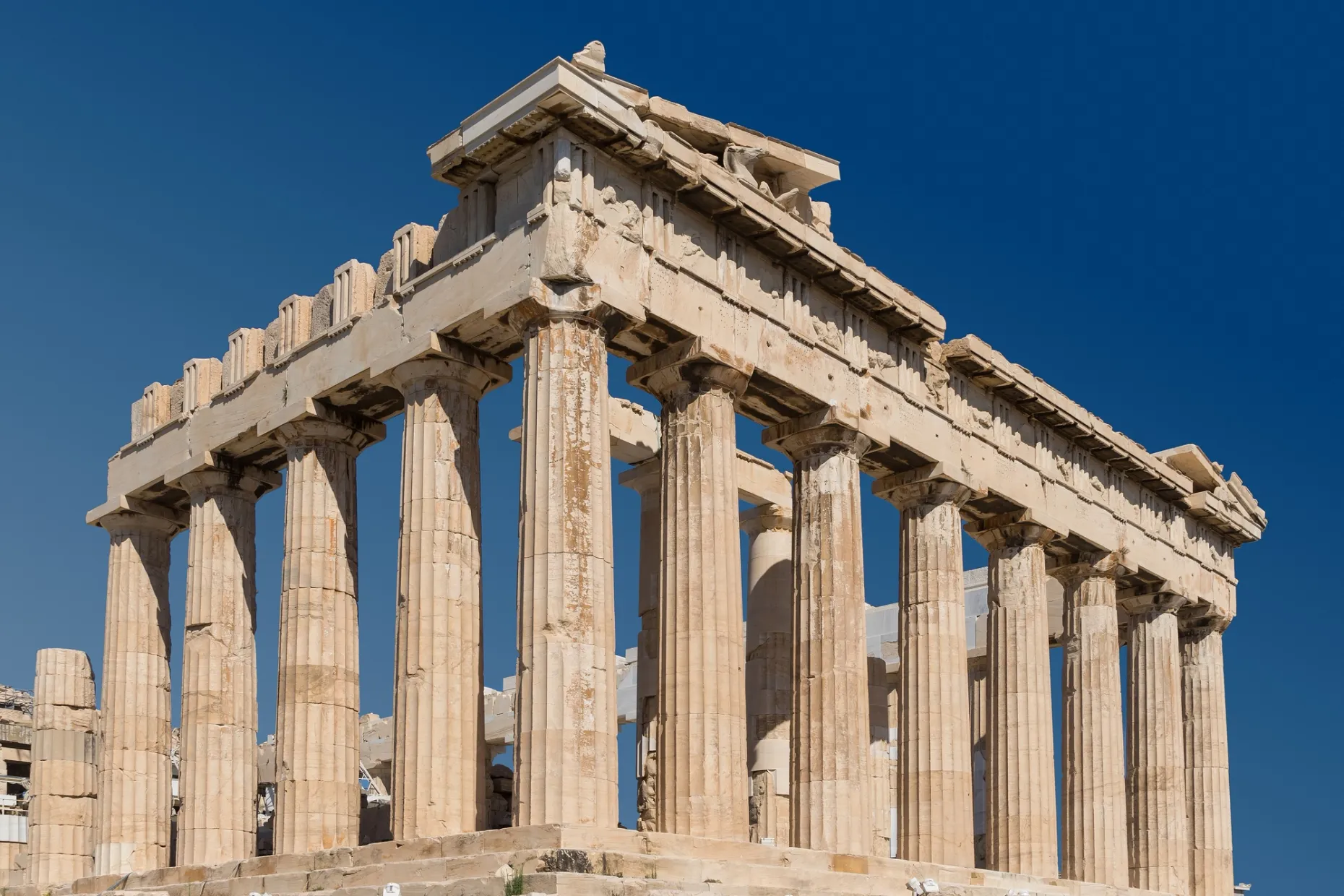
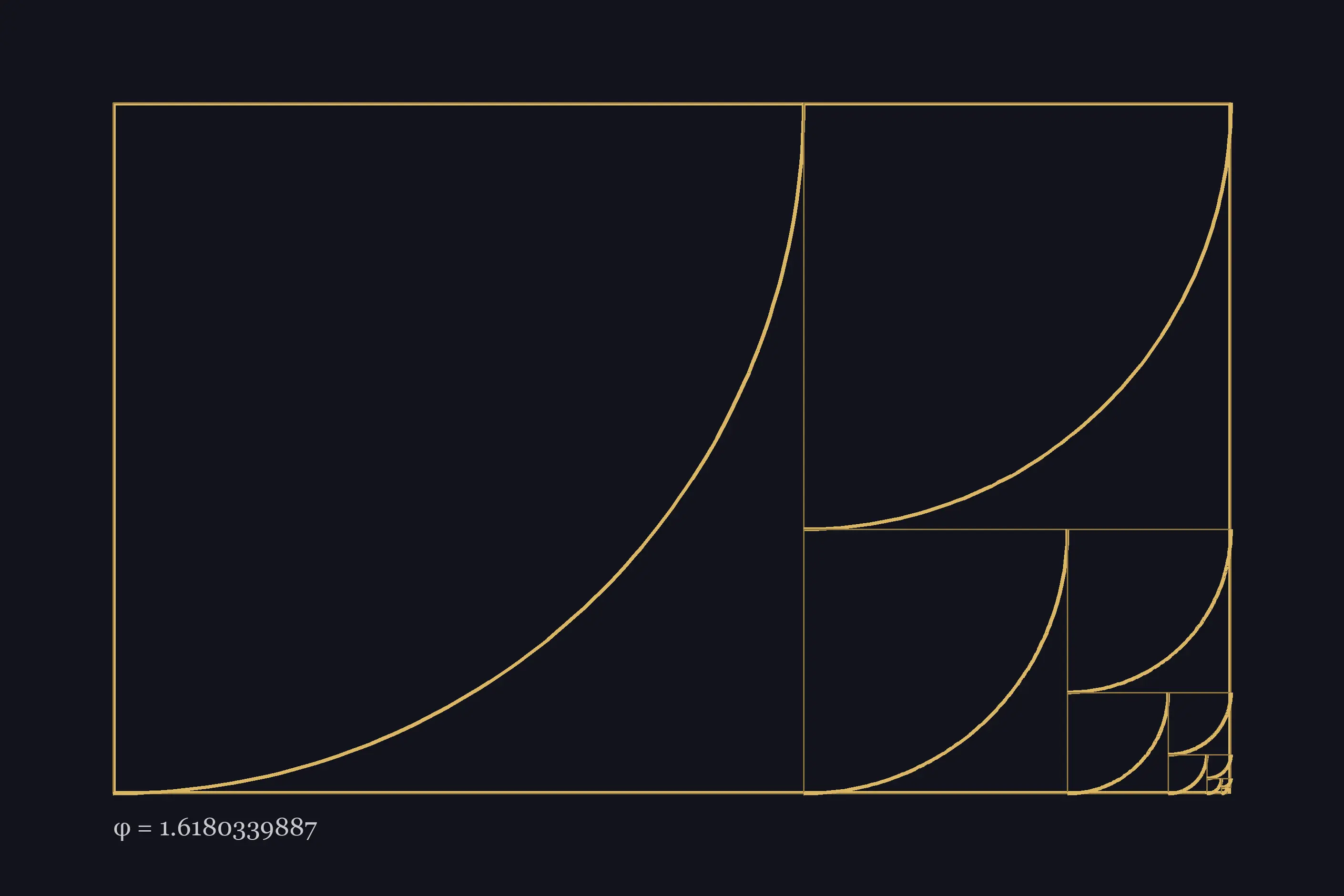
golden ratio rectangles and spirals, the Flower of Life built from overlapping circles of one radius, Metatron’s Cube, mandalas and yantras, the five Platonic solids, and the Vesica Piscis. Palettes lean toward gold, white, black, and deep blue against near-flat grounds, and composition is radial, built outward from a single centre point or a stated ratio rather than assembled from equal columns.
documented proportional systems in Greek and Gothic architecture and Renaissance painting, plus meditation diagrams from Hindu and Buddhist practice and geometric ornament from Islamic tradition, gathered under a unifying “sacred geometry” frame that is largely a nineteenth- and twentieth-century occult and New Age construction.
wellness and meditation branding, proportional grids where the ratio is verified rather than assumed, and decorative pattern work that reads as considered and precise.
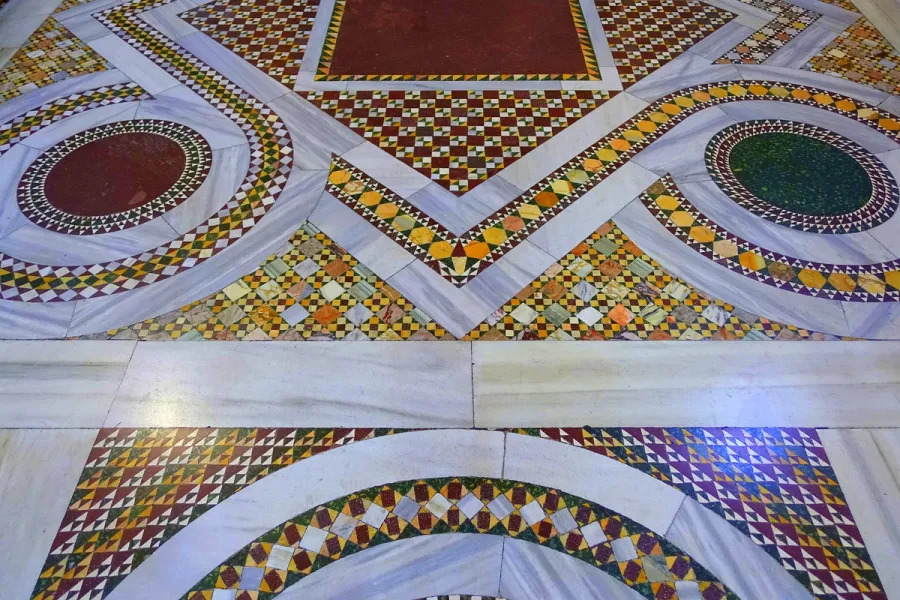
Individual pieces of sacred geometry’s history are old and well documented. Pythagoras taught that number underlies reality, and Plato identified the five Platonic solids as the building blocks of the elements in classical Greece. Islamic geometric ornament developed as a primary decorative and spiritual language partly because of the prohibition on representational imagery, a documented theological reason addressed within Islamic design traditions.
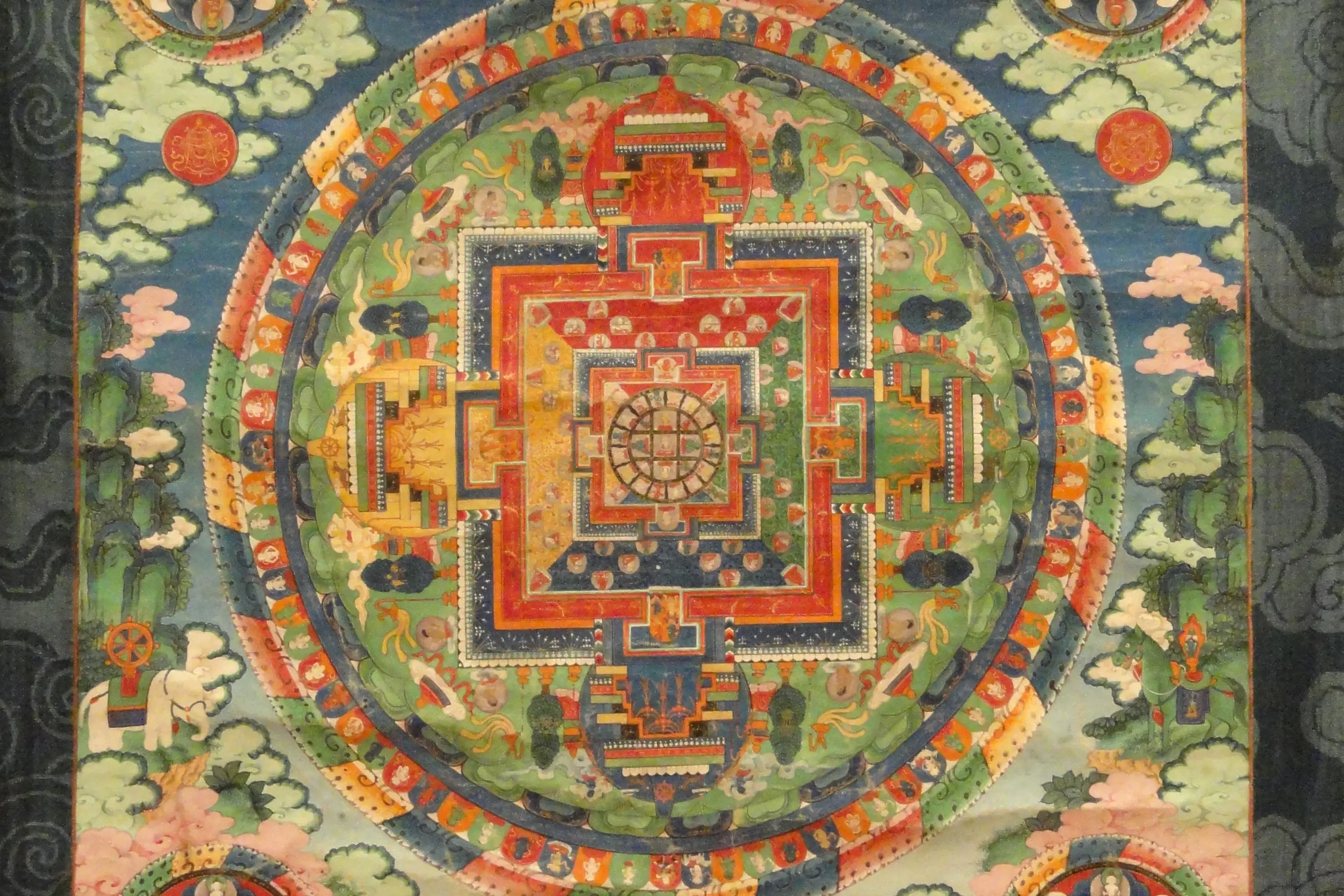
In Hindu and Buddhist practice, yantras and mandalas serve as meditation focuses, and Gothic cathedral builders worked with proportional systems believed to reflect divine order. Leonardo, Dürer, and other Renaissance figures studied mathematical proportion as a route to beauty, and the Vitruvian Man sets out ideal human proportion within a geometric frame.
The unifying claim, that all of this constitutes one continuous sacred geometry tradition, is much younger than any single piece of it. Much of the vocabulary now attached to these forms, including the framing of geometry as a literal divine signature, was revived and popularised by nineteenth- and twentieth-century esoteric movements such as Theosophy and later New Age spirituality.
Two widely repeated claims from that revival do not hold up under measurement. The golden ratio is often said to govern the Parthenon, built between 447 and 438 BC. Still, the ratio itself was not formally documented until Euclid, roughly a century later, and measured analysis of the temple shows the Greeks working to simple whole-number ratios such as 9:4, not phi.
The Flower of Life is often presented as ancient Egyptian, with examples cited at Abydos. Still, those specific carvings are now dated as graffiti from the Greek or Roman period, centuries after the temple itself, not part of its original design. Both cases show the same pattern: a real geometric form, and a historical claim about it that outruns the evidence.
| Element | What this style does | The tell |
|---|---|---|
| Colour | Restrained palettes, gold, white, black, or deep blue against a near-flat ground | A single metallic or dark accent rather than a full colour scheme |
| Form and shape | Golden rectangles and spirals, Platonic solids, the Vesica Piscis, interlocking circles | Every form traces back to a stated ratio or a compass-and-straightedge construction |
| Typography | Geometric sans faces, type kept minor, occasionally sized to the surrounding ratio | Type spacing or scale that follows the same Fibonacci or phi progression as the graphic |
| Layout and composition | Radial symmetry built outward from one centre point, golden ratio grid divisions | A composition that reads as generated from a single point or ratio, not assembled from equal columns |
| Materials or texture | Fine, uniform line work, engraved or laser-cut finishes that hold exact tolerances | Line weight thin and even enough to expose whether the construction is accurate |
| Imagery or ornament | Mandalas, yantras, Metatron’s Cube, nested polygons | Ornament built from a repeatable construction rule rather than freehand decoration |
| Neighbour | What it shares | What separates them |
|---|---|---|
| Tessellation and pattern systems | The same circle construction, symmetry, and tiling mathematics, often the identical visual forms | Tessellation studies plane symmetry and tiling as mathematics; sacred geometry adds the claim that the resulting pattern carries spiritual or cosmic meaning |
| Islamic design traditions | Reliance on geometric construction, repeated circle and polygon patterns, and a documented religious motivation for choosing geometry over figuration | Islamic geometric ornament belongs to one living tradition with its own theology and craft lineage; sacred geometry as covered here is a cross-cultural, largely modern synthesis that borrows motifs from many traditions, this one included, without committing to any single one |
| Biomimetic patterns | An interest in mathematical patterns that recur throughout nature, spirals and branching among them | Biomimetic patterns borrows a natural form or mechanism for functional or aesthetic reasons; sacred geometry treats the same natural recurrence as evidence of cosmic design |
Decide before you start whether you need the mathematics or the meaning, because the two calls lead to different work. If you use the golden ratio or Fibonacci sequence as a proportional tool, you must measure the result: a division close to but not exactly 1.618:1 is not the golden ratio, whatever the artwork claims. Match the specific form to the context you are designing for.
A Flower of Life mark reads as spiritual and wellness. A Platonic solid or a parametric grid reads as technical and precise, and the two are not interchangeable.
Where you borrow a motif from a living religious practice, a yantra or a mandala rather than a mathematical construction like a golden rectangle, you must credit the tradition rather than treat it as generic ornament. Keep the geometry sparse. One or two forms built with genuine precision carry more authority than a composition layering several sacred shapes at once, which is the fastest route into pastiche.
Commercial saturation is the most common failure. Heavy use across the wellness industry, yoga studios, meditation apps, and spiritual retail has made the Flower of Life and the mandala read as generic New Age signalling rather than considered design, and a mark that reaches for either without a specific reason reads as cliché rather than depth.
Mathematical overclaim is the second. Sacred geometry’s credibility depends on precision, so a claimed golden ratio, a Metatron’s Cube, or a mandala construction that does not measure out correctly undermines the rigour the style claims for itself.
Historical overclaim compounds it. Marketing copy for the style routinely presents the whole vocabulary as one continuous ancient wisdom tradition, when much of the connecting narrative is a nineteenth- and twentieth-century occult revival layered onto genuinely ancient but separate sources. Presenting the revival as the ancient tradition itself is a factual error, not a stylistic choice.
Cultural extraction sits alongside both. Yantras, mandalas, and other forms from living religious practice carry meaning their communities did not surrender by being visually striking, and using them as decoration divorced from that meaning is extractive in a way that using a golden rectangle, a mathematical construction with no single religious owner, is not.
No. The golden ratio and Fibonacci sequence function as proportional tools regardless of belief, and a rectangle or spiral built to those ratios looks the same whether or not you accept any cosmic reading of it.
Is the golden ratio really built into the Parthenon? Probably not intentionally. The Parthenon was built between 447 and 438 BC using simple whole number ratios, and phi was not formally documented until Euclid around 300 BC, roughly a century later, so the fit is applied after the fact rather than evidenced in the original design.
Is the Flower of Life pattern genuinely ancient Egyptian? The most cited example, at Abydos, is now dated as graffiti from the Greek or Roman period rather than part of the temple’s original construction. The geometric construction itself is old and simple to reproduce with a compass, which is separate from the claim about where any particular carved instance came from.
Is using a mandala or yantra in a brand cultural appropriation? It depends on the form. A mandala or yantra carries specific meaning within Buddhist or Hindu practice, and using it as decoration without engaging that meaning is appropriation. At the same time, a golden ratio grid or a Flower of Life construction is mathematics without a single religious owner.
Why does the same pattern show up throughout nature if it is not a divine signature? Physical efficiency. Spirals optimise packing, branching patterns minimise material, and Fibonacci proportions maximise exposure to light, so the recurrence shows how growth solves engineering problems rather than proof of design.
| Fact | Detail |
|---|---|
| Platonic solids identified | Plato, classical Greece, fifth to fourth century BC |
| Parthenon built | 447 to 438 BC, to simple whole number ratios |
| Golden ratio formally documented | Euclid, circa 300 BC |
| Vitruvian Man | Leonardo da Vinci, Renaissance |
| Modulor proportional system | Le Corbusier, twentieth century |
| Sacred geometry vocabulary popularised | Theosophy and New Age movements, nineteenth and twentieth centuries |