
2026-09-15
Nural Choudhury
Tessellation is the covering of a plane with shapes that meet edge to edge, with no gaps and no overlaps, and it follows a small, provable set of mathematical rules rather than taste.
It is often folded into sacred geometry, but the two ask different questions: tessellation asks whether a shape can tile a plane at all and how the result can repeat, a settled mathematical question, while sacred geometry treats certain shapes and proportions as carriers of symbolic or spiritual meaning, a claim about significance rather than a proof about coverage.
a single motif or shape repeated edge to edge across a surface with no gaps, no overlaps, and no visible seam; a small vocabulary of forms, triangles, squares, hexagons, or star-and-cross girih shapes, arranged by sliding, turning, mirroring, or a mirror-plus-slide; an order that holds even where the motifs themselves look organic or free-flowing.
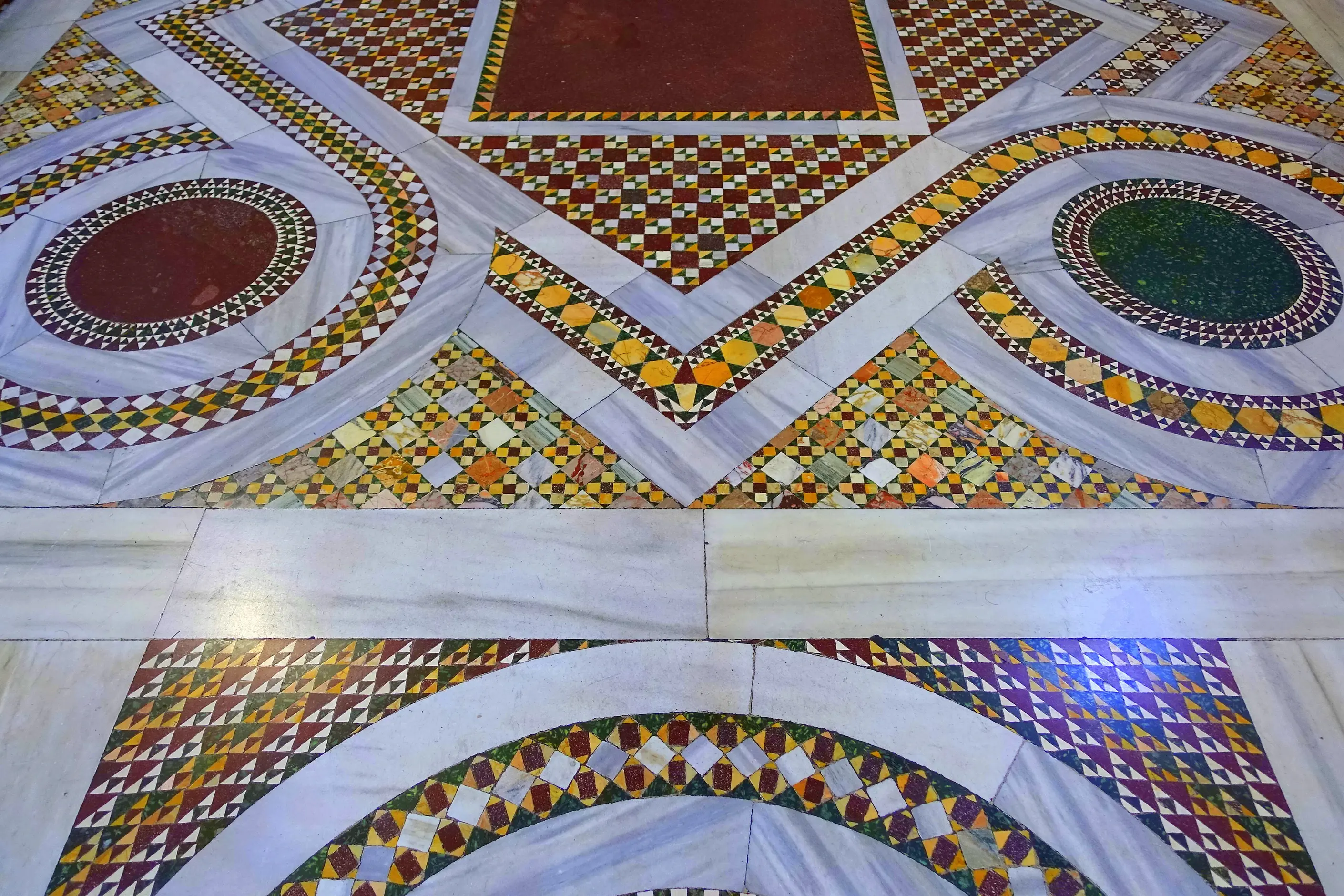
a mathematical structure practised for centuries in Islamic architectural ornament, Roman mosaic, and Gothic tracery before it was proved complete, when Yevgraf Fedorov established the seventeen possible symmetry types for any flat repeating pattern in 1891.
any surface that needs to read as one coherent field rather than a set of separate elements, textiles, wallpaper, packaging, architectural cladding, and digital backgrounds.
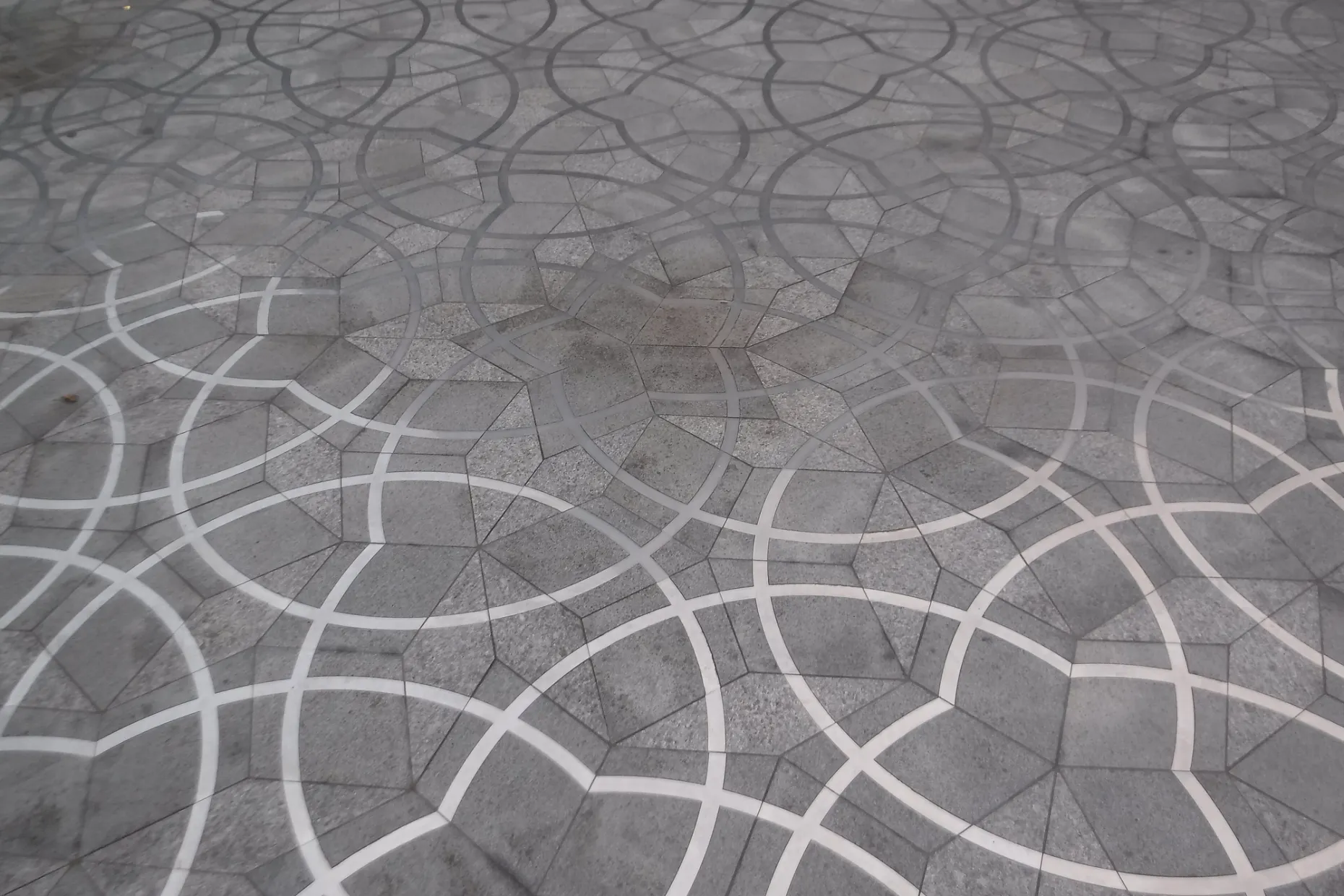
Only three regular polygons tile a plane using a single repeated shape: the equilateral triangle, the square, and the regular hexagon. Each works because its interior angle divides exactly into 360 degrees: six triangles, four squares, or three hexagons meeting at a point with nothing left over. Combining different regular polygons so that every vertex matches produces exactly eight further arrangements: the semi-regular, or Archimedean, tessellations.
Long before this was proved as mathematics, it was practised as craft. Islamic geometric ornament developed it furthest: artisans built star patterns radiating from central points. They devised girih tiles, a set of five shapes that generate complex interlocking designs from simple pieces. Some analyses find examples of all seventeen wallpaper groups in the decoration of the Alhambra in Granada, though that particular claim remains debated.
The seventeen wallpaper groups, the complete list of ways a pattern can repeat across a flat plane, were proved mathematically by Yevgraf Fedorov in 1891, formalising what craftspeople across cultures had already worked out by hand. Roman mosaic floors and Gothic window tracery carried their own tessellating traditions in Europe. William Morris, working through the late nineteenth century, revived hand-crafted pattern against industrial standardisation, drawing on medieval sources and setting the template the Arts and Crafts movement built on.
M.C. Escher turned tessellation into fine art after visiting the Alhambra in 1936, building interlocking figures- fish becoming birds, lizards fitting together with no gap between them- that carried the mathematics into galleries rather than mosques or textile mills. Early modernism went the other way: the International Style treated ornament as dishonest and left its surfaces deliberately blank. Postmodern movements, Memphis among them, brought pattern back deliberately, in direct reaction against that austerity.
A separate mathematical question, whether a set of shapes could tile a plane without ever repeating by simple translation, stayed open for decades. Roger Penrose answered it with a two-shape solution in 1974. A single tile that does the same job, nicknamed the hat, was found only in 2023, closing a question mathematicians had held open for sixty years.
| Element | What tessellation and pattern systems do | The tell |
|---|---|---|
| Form and shape | Builds every pattern from one repeat unit, the smallest tile that generates the whole surface once replicated | Elements crossing one edge continue exactly from the opposite edge, so four tiles placed in a two-by-two block show no seam |
| Symmetry | Repeats the unit by four operations only: translation, rotation, reflection, and glide reflection | The pattern feels free-flowing, but a fixed point, line, or axis is always findable underneath it |
| Repeat structure | Chooses a grid for the tiling: straight, half-drop, brick, diamond, or ogee, each producing a different sense of movement | A half-drop or brick repeat reads as diagonal motion even though every unit sits on a strict grid |
| Scale | Sets the repeat unit’s size against expected viewing distance, deciding whether the eye reads individual motifs or overall texture | Step back until the shapes flatten into a single tone: that is the scale decision made visible |
| Colour | Limits the palette and controls contrast so the repeat reads clearly rather than dissolving into noise | Few colours, strong contrast at the seams, and a ground colour chosen to carry the whole field |
| Ornament | Draws its motifs either from pure geometry, such as polygons, stars, and girih forms, or from figuration folded into a tessellating shape | A star or interlocking figurative form radiating from a fixed point, never sitting in isolation on a blank ground |

| Neighbour | What it shares with tessellation and pattern systems | What separates them |
|---|---|---|
| Sacred geometry | The same repertoire of polygons, circles, and proportional relationships, built with comparable precision | Tessellation is a solved, checkable field: three regular tilings, seventeen wallpaper groups, a growing body of aperiodic-tiling proofs. Sacred geometry treats the same forms as carriers of symbolic or spiritual meaning, a claim about significance that the mathematics itself does not make |
| Islamic design | Star patterns, girih-style interlocking construction, and centuries of the most sophisticated tessellation practice on record | Tessellation and pattern systems is the general mathematics and its use across many cultures and media, such as textiles, wallpaper, screens, and fine art. Islamic geometric ornament is one specific tradition within it, developed for religious and cultural reasons, aniconism and an emphasis on divine unity among them, that the mathematics alone does not carry |
| Optical illusions in design | Repeating structured forms that can produce strong perceptual effects, apparent movement, vibration, depth | Tessellation’s rules concern coverage: whether a shape can fill a plane with no gaps. Optical illusion concerns perception: how the eye and brain misread a static arrangement, independent of whether the underlying shapes tile at all |
Set the repeat unit first. Decide what the smallest tile must contain, then treat every other decision, colour, motif, scale, as a decision about that one tile.
Design the edges before the centre. Whatever leaves the top of the unit must continue exactly from the bottom, and whatever leaves the left edge must continue from the right. Test this by tiling four copies in a two-by-two block: the seam must not be visible.
Give the corners particular attention. Four units meet at every corner, so any element placed there repeats four times in a tight cluster, and a design that reads well along an edge can crowd badly where the corners meet.
Choose a repeat structure that matches the movement you want. A straight repeat reads as a stable grid; a half-drop or brick repeat introduces diagonal motion without changing the unit itself.
Set scale against the distance from which the pattern will be seen. Test the tile at its intended final size, not at the size that is comfortable to design at on screen.
Limit the palette and hold contrast at the seams. Colour clustering or an uneven palette shows as soon as the unit repeats, even where it is invisible in a single tile.
Treat mathematical correctness as necessary and not sufficient. A pattern that tessellates cleanly but carries no reason to exist is still a generic fill, so decide what the pattern is for before deciding how it repeats.
The most common failure is mechanical. A seam that doesn’t close shows up wherever units meet, usually because an edge element wasn’t carried exactly across to its opposite edge. It shows far more s up in the printed or built version than in the flat file.
Scale mismatches are the second recurring problem. A repeat unit large enough to read as individual motifs at arm’s length becomes visual noise across a whole wall or a small format, and a unit fine enough to work at that smaller size can appear to vibrate once blown up to full scale.
Complexity without an application in mind produces the same failure from the other direction. Detail worth close inspection on a small object overwhelms once applied to a large surface, and pattern chosen because a surface seems to need something carries no identity and no reason to be there.
Repetition without an underlying system is arbitrary, not tessellation, whatever it resembles. Gaps, forced overlaps, and inconsistent spacing read as a mistake even to a viewer who cannot name the mathematics behind them.
The style also carries a real historical rupture. Early modernism treated ornament as dishonest, and blank surfaces became doctrine under the International Style. Postmodern movements, Memphis among them, reintroduced pattern in direct reaction to that austerity, so a designer reaching for pattern today steps into an argument that has already run once.
Borrowing from a specific tradition, Islamic geometric ornament most visibly, without engaging its history and reasoning reduces centuries of mathematical and religious practice to a texture. Where the intent is decorative, name the tradition and link to its own page rather than treating it as an interchangeable geometric look.
What is a tessellation? A covering of a surface by shapes that meet edge to edge, with no gaps and no overlaps. The shapes can be identical or drawn from a small fixed set repeated according to a rule.
How many regular tessellations are there? Three. Equilateral triangles, squares, and regular hexagons are the only regular polygons whose interior angle divides 360 degrees exactly, which is why no other single regular polygon can tile a plane alone.
What are the seventeen wallpaper groups? The complete set of symmetry types available to any pattern that repeats across a flat plane, proved by Yevgraf Fedorov in 1891. Every wallpaper, tile layout, and textile repeat belongs to one of them.
What is aperiodic tiling? A tiling that covers a surface without ever repeating by simple translation. Roger Penrose found a two-shape solution in 1974, and a single-tile solution, nicknamed the hat, was found in 2023, closing a question mathematicians had held open for sixty years.
Why does hexagonal packing keep appearing in nature? A hexagon encloses more area for less perimeter than any other shape that tiles a plane alone, which is why honeycomb and basalt columns arrive at the same shape independently.
| Fact | Detail |
|---|---|
| Regular tessellations | Only three exist: equilateral triangles, squares, and regular hexagons |
| Semi-regular tessellations | Eight exist, each combining two or more regular polygons with an identical arrangement at every vertex |
| Wallpaper groups | Seventeen distinct symmetry groups describe every possible repeating flat pattern, proved by Yevgraf Fedorov in 1891 |
| Aperiodic tiling | Roger Penrose found a two-shape solution in 1974 that covers a plane without ever repeating by translation |
| The einstein tile | Nicknamed the hat, a single aperiodic tile found in March 2023 by Smith, Myers, Kaplan, and Goodman-Strauss that settled a sixty-year open question |

Sacred geometry treats certain geometric forms and proportions, among them the golden ratio, the Platonic solids, and the Flower of Life, as evidence of a divine or cosmic order laid over mathematics that is otherwise plain and checkable.
Read it
Islamic design traditions are interlinked visual systems (geometric patterns, calligraphy, and arabesques) that developed over fourteen centuries and across three continents, from Spain to Indonesia.
Read it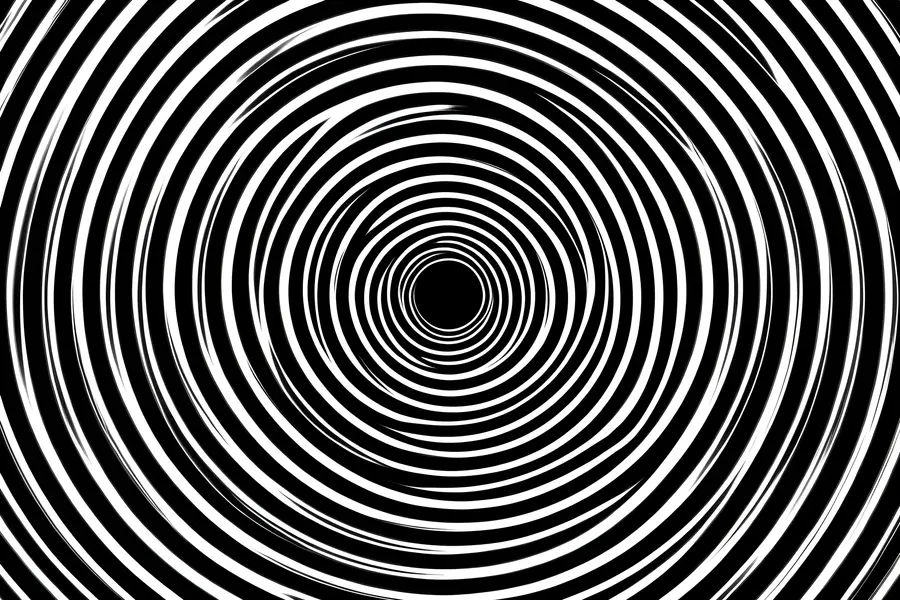
An optical illusion is a visual pattern that reliably makes the brain construct a percept that contradicts the physical stimulus: a line that is not really longer, a surface that does not really move, a figure that is not really three-dimensional.
Read it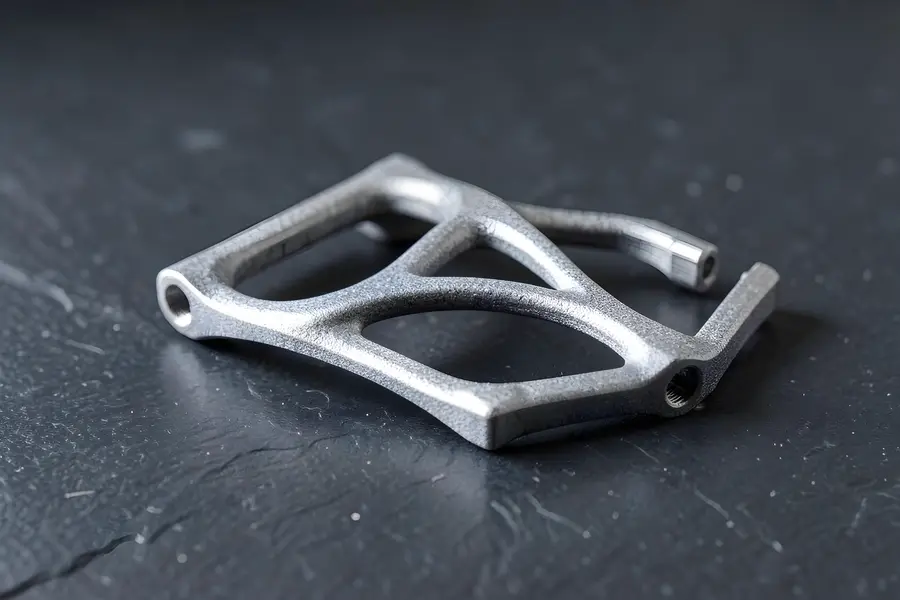
Generative design systems set parameters, constraints, and goals, then let an algorithm search the space of possible solutions instead of drawing one outcome by hand.
Read it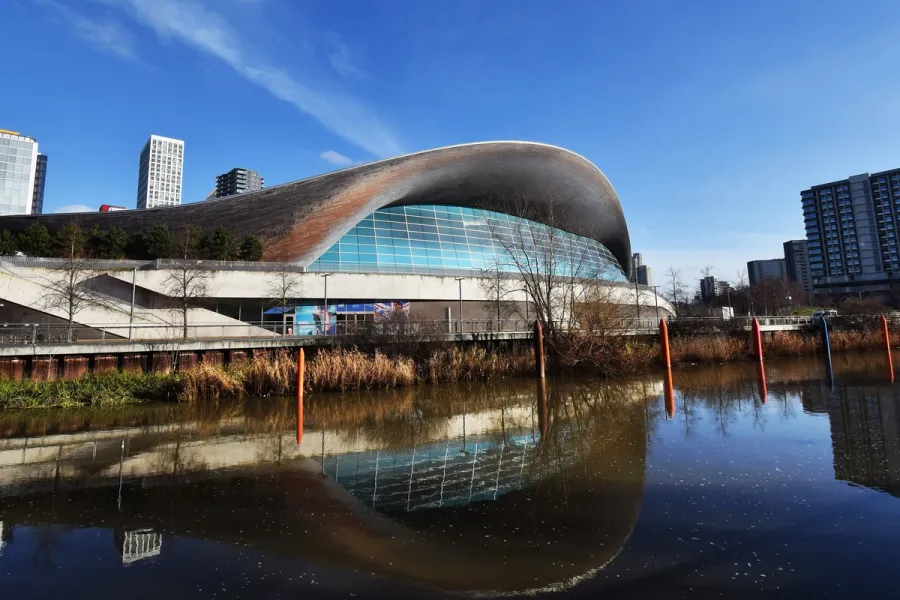
Parametric design defines relationships among adjustable parameters to generate responsive, optimisable, and varied design outcomes.
Read it
Art Deco is a design style of the 1920s and 1930s built on geometric precision, symmetrical order and luxury materials, applied across architecture, graphic design and objects.
Read it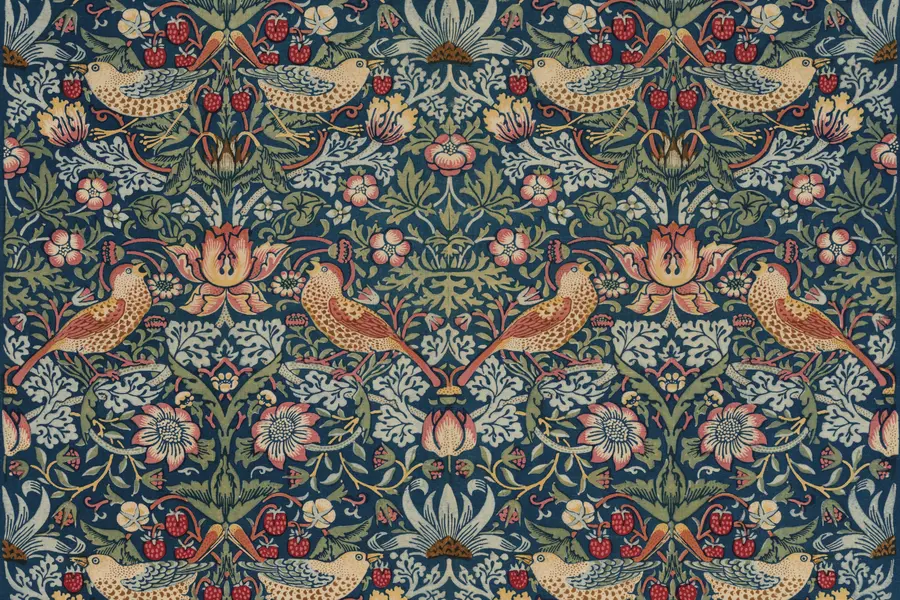
The Arts and Crafts movement is a design and social reform movement that began in Britain in the second half of the nineteenth century, built around dense botanical patterns, honest materials and visible handcraft, as a direct reaction against industrial factory production.
Read it