

2026-09-15
Nural Choudhury
Biophilic design is the practice of bringing patterns of the natural world into architecture, interiors, and digital products: daylight, water, plants, natural materials, and spatial variety, because human beings evolved among those patterns and still respond to them.
This page supports human wellbeing through evidence‐based patterns of nature connection in architecture, interiors, and digital spaces. Environmental impact, carbon, and resource efficiency are separate subjects, with their own pages.
A working vocabulary for nature connection in a space, digital or physical, beyond “add some plants”: which patterns exist, what each one does for an occupant, and how to judge whether an intervention is genuine or decorative.
Any environment where people spend sustained time, offices, healthcare settings, schools, homes, hospitality, and the equivalent digital spaces where a screen substitutes for a window.
Daylight and outdoor connection. Fix those before adding a single plant; a living wall in a windowless room treats the least important symptom.
E.O. Wilson set out the biophilia hypothesis in his 1984 book Biophilia: that humans, having evolved in natural environments over most of our history, carry an innate affinity for living systems rather than a learned preference for them.
Roger Ulrich supplied the field’s founding evidence the same year. His 1984 study in the journal Science found that hospital patients recovering from surgery left sooner and needed less pain medication when their room looked out on trees rather than a brick wall; it remains the most cited single result in biophilic design.
Rachel and Stephen Kaplan’s Attention Restoration Theory, published in 1989, offers the mechanism: directed attention, the kind a task demands, depletes with use, while a natural setting engages an effortless, involuntary attention that lets directed attention recover.
Terrapin Bright Green organised the accumulated research into a design framework in its 2014 report, sorting the evidence into fourteen patterns across three groups. That framework remains the field’s standard reference, and this page uses it.
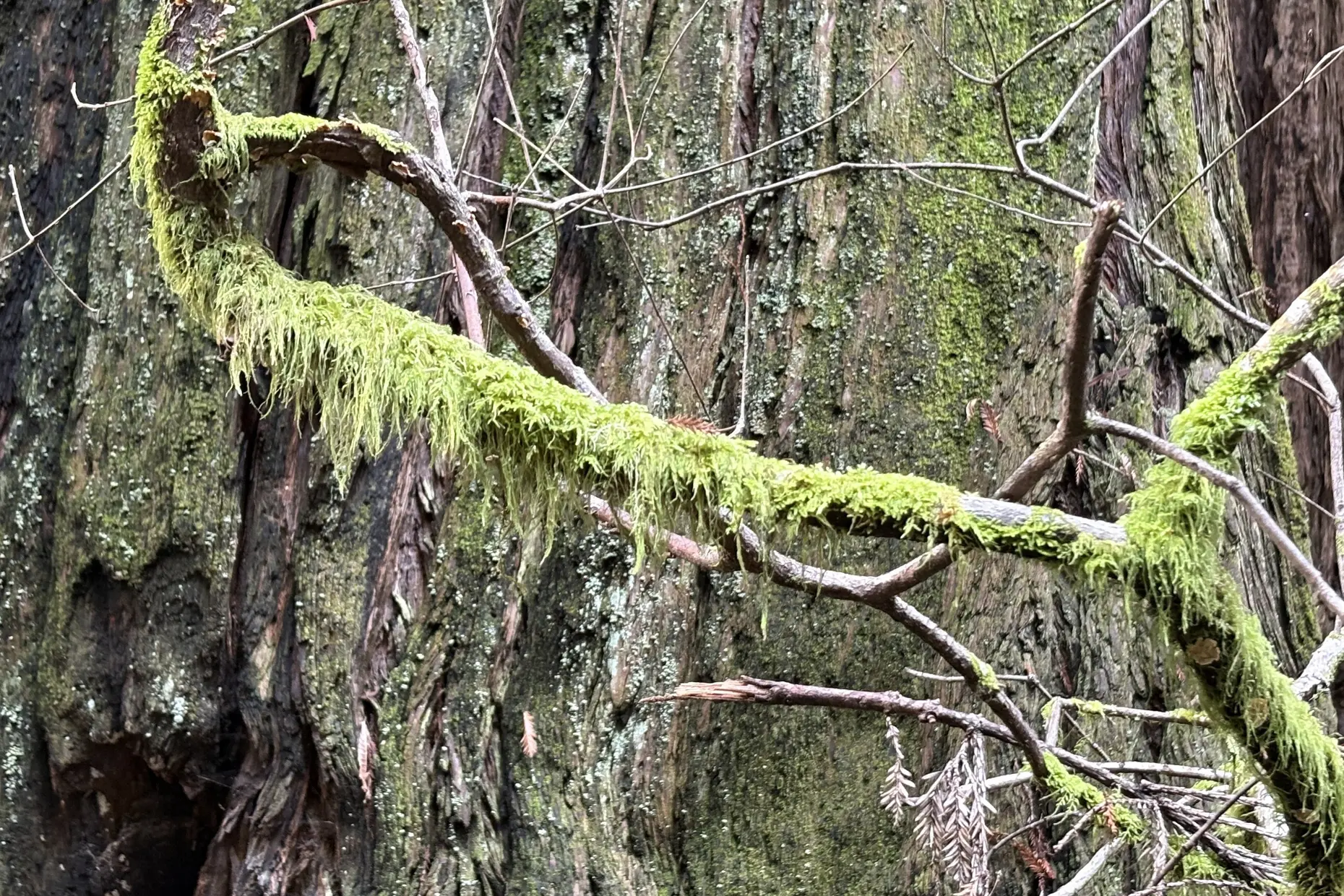
Terrapin Bright Green’s fourteen patterns sort into three groups: direct experience of nature, natural analogues that reference nature without being it, and spatial configurations that evoke a natural setting. A thorough application draws from more than one group, not only the first.
| Group | Pattern | What it is | Where it applies |
|---|---|---|---|
| Nature in the space | 1. Visual connection with nature | A view of plants, water, animals, or landscape | Windows facing greenery, indoor plants, an aquarium |
| Nature in the space | 2. Non-visual connection with nature | Nature engaged through sound, touch, or smell | The sound of water, natural textures, plant scent |
| Nature in the space | 3. Non-rhythmic sensory stimuli | Unpredictable natural movement that briefly holds attention, then releases it | Leaves in the wind, flowing water, a fire |
| Nature in the space | 4. Thermal and airflow variability | Subtle change in temperature and air movement, rather than uniform climate control | Operable windows, varied microclimates within a floor plate |
| Nature in the space | 5. Presence of water | Water seen, heard, or touched | Fountains, streams, rain features |
| Nature in the space | 6. Dynamic and diffuse light | Light that changes over time or is filtered, rather than static and uniform | Daylight cycles, light dappled through foliage |
| Nature in the space | 7. Connection with natural systems | Awareness of season, weather, or growth | Planting that visibly changes, weather-responsive facades |
| Natural analogues | 8. Biomorphic forms and patterns | Organic shapes such as curves, spirals, and fractals | Furniture and facade geometry drawn from natural form |
| Natural analogues | 9. Material connection with nature | A material with a visible natural origin | Wood, stone, and wool, chosen to age visibly |
| Natural analogues | 10. Complexity and order | Layered information arranged the way natural systems arrange it | Fractal-like organisation in pattern and structure |
| Nature of the space | 11. Prospect | An unimpeded view over distance | Open vistas, elevated positions, clear sight lines |
| Nature of the space | 12. Refuge | An enclosed, protected space that gives a sense of withdrawal | Alcoves, canopies, lower ceiling zones |
| Nature of the space | 13. Mystery | Partially obscured information that invites exploration | Winding paths, layered or partially obscured views |
| Nature of the space | 14. Risk or peril | An identifiable threat paired with a reliable safeguard | Height with a barrier, exposure with a security measure |

Start with direct contact with nature before decoration. Fix daylight access, outdoor views, and ventilation first: these carry the strongest evidence, and the patterns that follow depend on them working.
Treat spatial configuration, prospect, refuge, and mystery as early design decisions, not finishing touches. The floor plan and the section set these, so decide them with the architecture rather than after it exists.
You must choose authentic natural materials over an imitation. Wood, stone, and natural fibre carry the texture, ageing, and variability that a laminate finish cannot replicate, and people notice the difference even when they cannot name it.
In a digital product, you can’t offer direct contact with nature. You must apply natural analogues instead: natural imagery, organic interface shapes, and nature-derived colour reference the patterns without replacing physical nature exposure, and a good digital application still points a user back toward genuine time outdoors.
I weigh a small number of patterns applied thoroughly over a long list applied thinly. Three patterns fully worked into how a space is used outperform fourteen sprinkled across its surfaces.
| Priority | Get right first | Common shortcut to avoid |
|---|---|---|
| Direct nature | Daylight, outdoor views, air movement | Adding plants before fixing daylight |
| Materials and form | Authentic wood, stone, and natural fibre | Imitation finishes marketed as natural |
| Spatial configuration | Prospect and refuge set in the floor plan | Treating layout as fixed, then adding greenery |
| Digital reference | Natural imagery, organic form, nature-derived colour | Presenting screen time as a substitute for time outdoors |

Take an open-plan office with a deep floor plate: little daylight reaches the centre of the room, and the brief calls for a biophilic upgrade on a fixed budget.
The daylight problem comes first. A light well or a change to the glazing line reaches further into the plan than any amount of planting can compensate for, so that decision happens before any material or planting choice.
Spatial variety comes next: a handful of enclosed, lower-ceilinged alcoves near the window line give refuge, while the open floor plate itself already gives prospect. The addition needed is enclosure, not openness.
Materials follow. Timber joinery and a wool-based textile palette replace the previous laminate and synthetic fabric, chosen for where people sit for hours rather than for the entrance visitors see first.
Plants arrive last, concentrated where people spend the workday rather than spread thinly through corridors and the reception desk, because the benefit tracks time spent in a space, not the square footage it covers.
I see a living wall installed as the headline biophilic feature while the room behind it still has no daylight and no operable window. The wall photographs well and changes nothing about how the space feels to work in for eight hours.
Nature imagery gets substituted for nature access more often than the discipline admits. A large canvas print of a forest is not a pattern; it is decoration with a nature theme, and it delivers none of the attention-restoration or stress-reduction effect the research attaches to an actual view or an actual material.
I also see biophilic budget spent on spaces people pass through rather than spaces people occupy. A living wall in a lobby nobody lingers in returns less than the same spend in the desks, the break room, or the ward where people spend hours, because the benefit tracks exposure time, not square footage.
What is biophilic design:
The practice of bringing patterns of the natural world, daylight, water, plants, natural materials, and spatial variety, into a built or digital environment, because humans evolved among those patterns and still respond to them.
Is biophilic design the same as sustainable design:
No. Biophilic design supports human wellbeing through connection to nature, and sustainable design addresses environmental impact, carbon, and resource efficiency. They are different subjects that share the word “nature” and are covered on separate pages.
Is biophilic design just adding plants:
No. Plants cover one pattern of fourteen. A living wall in a room with no daylight and no outdoor view addresses the pattern with the weakest evidence while ignoring the strongest.
Can a digital product be biophilic:
Only indirectly. A screen cannot provide a direct connection to nature. However, natural imagery, organic form, and natural colour can reference it, and the strongest approach still points a user toward genuine nature exposure rather than replacing it.
Does biophilic design improve wellbeing:
The evidence is strongest for daylight and outdoor views. Ulrich’s 1984 study linked hospital nature views to faster recovery, and Kaplan’s Attention Restoration Theory explains why nature exposure restores depleted attention. Broader workplace and school claims exist but carry weaker, less specific evidence.
| Fact | Detail |
|---|---|
| Term origin | E.O. Wilson, biophilia hypothesis, book Biophilia, 1984 |
| Founding evidence | Roger Ulrich, hospital recovery study, journal Science, 1984 |
| Psychological mechanism | Attention Restoration Theory, Rachel and Stephen Kaplan, 1989 |
| Pattern framework | Terrapin Bright Green, 14 Patterns of Biophilic Design report, 2014 |
| Pattern groups | Three: nature in the space, natural analogues, nature of the space |
| Total patterns | 14 |

Environmental design is the practice of shaping visual communication within physical space: the signage, wayfinding systems, and graphics that guide people through buildings, campuses, and cities.
Read it
Sustainable design in digital work means cutting the energy and hardware a product needs: lighter pages, fewer requests, longer device life, and honest measurement of the savings.
Read it
Inclusive design is the practice of designing for the full spectrum of human variation, whether permanent, temporary, or situational, rather than for an imagined average user with no constraints at all.
Read it
An interface pattern is a solution to a recurring design problem, refined through enough use elsewhere that the person encountering it doesn’t have to figure out how to use it.
Read it