

2026-09-15
Nural Choudhury
Inclusive design is the practice of designing for the full spectrum of human variation, whether permanent, temporary, or situational, rather than for an imagined average user with no constraints at all.
This page covers that shift, from checkbox accessibility to a human-centred practice built around that spectrum, and how to use the spectrum as a design taxonomy rather than a compliance category. WCAG conformance, testing, and legal requirements belong to Accessibility Standards: WCAG, Inclusive Design and Digital Accessibility Guide, not to this page.
A practice that treats disability, language, culture, and circumstance as design inputs from the first sketch, using permanent, temporary, and situational constraints as a working taxonomy rather than a checklist to satisfy once.
Any product, service, or physical space used by more than one kind of person. It applies earliest in research and concept work, well before a screen exists to test against a standard.
Build the spectrum into who you recruit for research before you build it into the interface. A team that only meets its edge users at usability testing has already designed around them.
Inclusive design grew out of universal design, the movement that argued for building environments and products usable by the widest range of people rather than retrofitting for exceptions afterwards. Digital practice absorbed that thinking alongside accessibility compliance work, and the two are still taught together more often than apart.
Microsoft’s Inclusive Design Toolkit gave the field its clearest working idea: solve for one person’s constraint and the solution often extends to many more people than the one it was built for. The toolkit remains a reasonable starting point for a team new to the practice.
The disability rights movement supplied the other half of the method. “Nothing About Us Without Us” holds that decisions affecting disabled people should involve disabled people, not be made on their behalf alone. Inclusive design borrows that principle directly as its participatory method.

Ability is not a fixed category. It moves with time of day, environment, and life stage, and everyone sits somewhere on that spectrum more than once in a day, not only people with a diagnosed disability. Treating the spectrum as a design taxonomy, rather than a compliance category, changes what you ask at the start of a project.
| Constraint type | Example | What it changes in the design |
|---|---|---|
| Permanent | Someone who is blind, deaf, or has a lifelong difference in mobility or dexterity | Build the primary path to work without sight, hearing, or fine motor control, not as an addition to it |
| Temporary | A broken wrist, an eye infection, early pregnancy | Design as though the constraint will not resolve, since the same path has to serve someone for whom it will not |
| Situational | Bright sunlight on a screen, a hand full of shopping, a child needing attention | Treat the constraint as universal, since every user meets one of these eventually, and put the fix in the default rather than a setting |
Microsoft’s insight holds in practice: a solution built for the permanent end of the spectrum tends to serve the temporary and situational ends too. Curb cuts, built for wheelchair users, now carry every stroller, delivery trolley, and wheeled suitcase on the pavement. The method reverses the usual order: design for the edge first, then check whether the centre still works, rather than designing for the centre and patching the edge in afterwards.
I treat edge cases as a source of design discipline, not a list of exceptions to clear before launch. A flow that works for someone who cannot see, cannot use a pointer, and cannot hear forces a genuine constraint onto the design, and that constraint is usually what makes the mainstream version better too. Ask who would find this hardest to use before you ask what the average user needs.
Modality independence means the same information is available through more than one channel- visual, auditory, and textual- and the user chooses which one fits their situation. A fallback is what you build when accessibility arrives late. A genuine choice is what you build when you started with the spectrum.

Inclusive design does not stop at the interface. Team composition changes what gets noticed: a team without anyone who lives the constraints it is designing for will miss exclusions that no later process step catches. That is not a reason to wait for the perfect team; it is a reason to bring in perspectives the team lacks.
Participatory design is how you do that without pretending expertise nobody on the team has earned. “Nothing About Us Without Us” means affected people shape decisions throughout the project, not validate them once at the end. Recruit across the spectrum, permanent, temporary, and situational, and pay contributors for their time the way you would pay any other expert.
Inclusion also extends to who can reach the product at all. Plain language reaches readers with a different first language or a different reading level. A design that assumes a fast connection, a recent device, or a paid subscription excludes people on cost and access alone, before ability enters the picture.
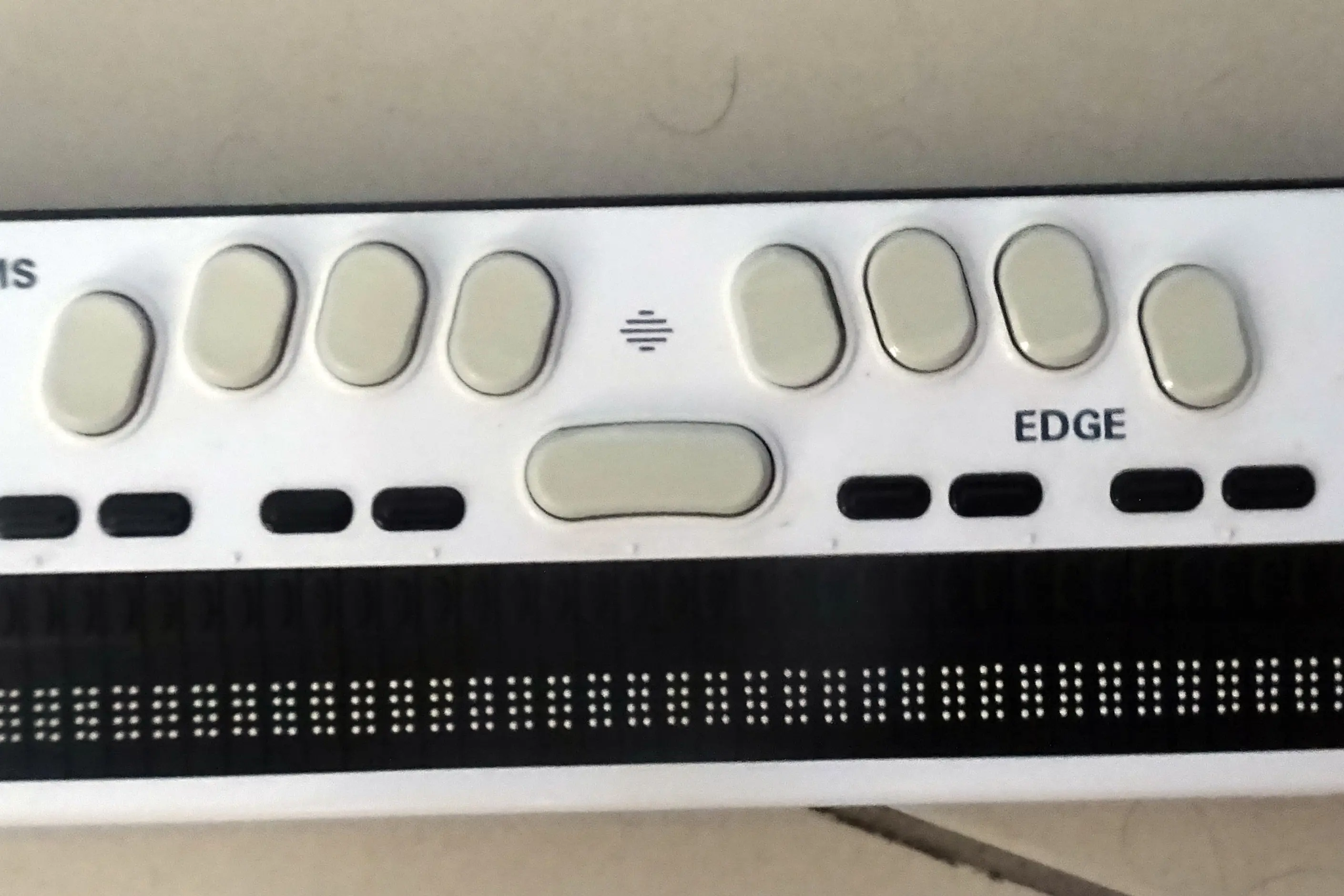
Build the spectrum into your research plan before you build it into the interface. Recruit participants across permanent, temporary, and situational constraints, not only people with a diagnosed disability, and you must include people who use assistive technology.
Ask who would find this hardest to use at the concept stage, not the review stage. Design for that person first, then check whether the mainstream version still holds. If it does not, treat that as a design problem, not an edge case to defer.
Give every essential piece of information more than one modality and let the user choose between them. Don’t treat a text alternative as a fallback bolted onto a finished visual design.
Bring affected people into the process early enough that their feedback can still change direction, and compensate them for their time. If you consult late, once the design is fixed, their involvement becomes decoration rather than participation.

Take an account settings screen with a toggle for two-factor authentication. The default assumes a user who can see a QR code, hold a phone steady, and read a six-digit code from the screen in under thirty seconds.
Apply the spectrum to it. A permanent constraint: someone using a screen reader cannot see the QR code, so the flow needs a text-based setup path from the start, not as an alternative bolted on afterwards. A temporary constraint: someone recovering from eye surgery cannot read a small code either, and the same text path serves them.
A situational constraint: someone signing in on a train with one hand full cannot hold a phone steady enough to scan a code, so a code you can copy and paste, not only a code you photograph, belongs in the default flow rather than a settings menu three levels down.
Building for the screen reader user first produced the text path everyone else in the example also needed. That is the solve-for-one method working as intended, and it took nothing away from the person the original design was built for.
I watch teams add a persona with a disability at the review stage, once the flows are drawn, when changing the primary path costs a sprint instead of an hour. A persona is not inclusion. It is decoration if it arrives once the decisions are already made.
I have also seen participatory research run with one participant standing in for an entire disability, as though blindness were a single experience rather than a spectrum. One person’s feedback is one person’s feedback, not a representative sample, and treating it as the latter creates false confidence, which is worse than not asking at all.
Both failures share a cause: a team designing for a diversity it does not have in the room. Without anyone who lives the constraint, or a genuine relationship with people who do, a team is guessing at exclusions it cannot see, and guessing is exactly what the spectrum exists to replace.
Is inclusive design the same as accessibility? No. Accessibility meets a defined standard, and inclusive design is the broader practice that produces it, extending further into research, team composition, and participatory methods. For the standard itself, see
Do I need someone with a disability on the design team to do this well? It helps more than any process can substitute for, but the immediate obligation is properly conducted participatory research, not headcount alone. Recruit and pay disabled participants throughout the project rather than waiting for the ideal team.
What is the difference between a temporary and a situational constraint? A temporary constraint changes a person’s own ability for a period, a broken wrist or an eye infection. A situational constraint comes from context rather than the person, bright sunlight or a hand full of shopping, and passes once the context changes.
Where does “solve for one, extend to many” come from? Microsoft’s Inclusive Design Toolkit. The idea is that solving for someone at the permanent end of a constraint spectrum tends to produce a better solution for people at the temporary and situational ends too.
Is one round of testing with disabled participants enough? No, and treating it as enough is the tokenism this page warns against. Participation needs to start while decisions are still open and continue past a single round of testing.
| Item | Detail |
|---|---|
| Constraint taxonomy | Permanent, temporary, and situational, used here as a design taxonomy rather than a compliance category |
| Origin of “solve for one, extend to many” | Microsoft’s Inclusive Design Toolkit |
| Origin of the participatory principle | The disability rights movement, “Nothing About Us Without Us” |
| Compliance framework | WCAG conformance, contrast ratios, testing, and legal requirements sit with Accessibility Standards: WCAG, Inclusive Design and Digital Accessibility Guide, not this page |
| Core modalities | Visual, auditory, and textual, each independent rather than a fallback for the others |

Digital accessibility is the practice of building products people can use, whatever their permanent, temporary, or situational disability, measured against a published standard rather than opinion.
Read it
An interface pattern is a solution to a recurring design problem, refined through enough use elsewhere that the person encountering it doesn’t have to figure out how to use it.
Read it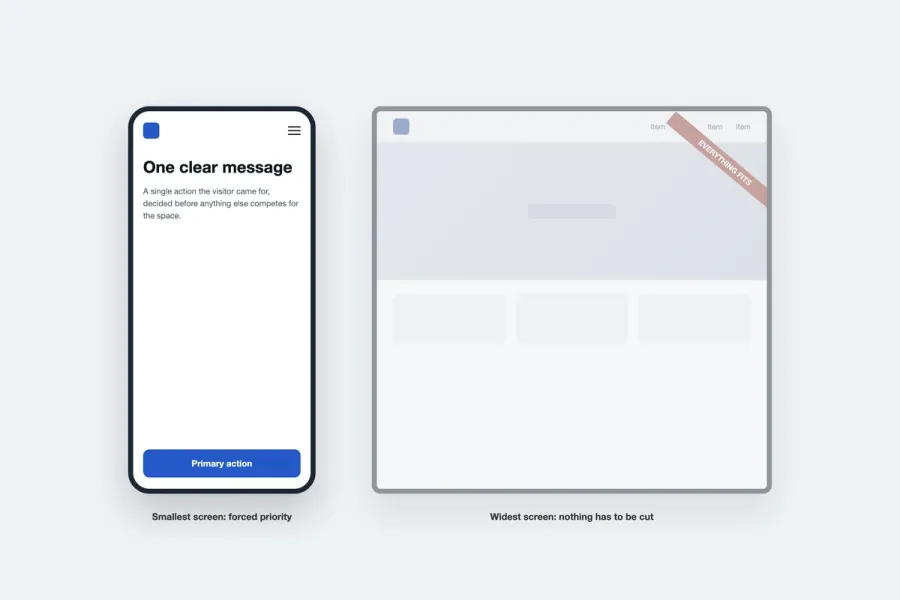
Mobile-first design starts with the smallest, most constrained screen and builds upward, rather than shrinking a finished desktop design to fit.
Read it
User research is the systematic study of what users do, need and struggle with, combining qualitative depth with quantitative scale to ground design in evidence.
Read it