
2026-09-15
Nural Choudhury
A brand sprint is a time-boxed workshop that compresses brand strategy, verbal identity, and visual identity development into one structured engagement with a fixed team and a fixed calendar.
The brand argument that keeps reopening because nobody with the authority to settle it was ever in the room, and the visual work that cannot start. At the same time, the strategy underneath it stays unresolved.
Brief design and communications work from settled positioning instead of re-litigating it. Feed the finished identity into a design system for documentation at scale, and check existing messaging against the verbal identity in a content audit.
The Golden Circle argument, the brand pyramid, and the statement set of description, trueline, and tagline from phase one; a logo, colour system, typography system, and visual language applied to real formats from phase two; a verbal identity, communication strategy, co-branding guidelines, and an implementation plan from phase three.
The phrase borrows credibility from the design sprint, the five-day process Jake Knapp developed at Google Ventures for validating a product idea before it is built. Knapp has also published a Brand Sprint exercise of his own: a shorter workshop of about three hours, built around Simon Sinek’s Golden Circle and a set of quick-fire questions. That is a genuinely different tool from the 15-day process below, even though the two share a name, a facilitator-led format, and at least one exercise.
Sinek’s Golden Circle draws some of its appeal from claims about brain structure, and neuroscientists have said the field does not understand those systems well enough to support them. I use the sequence as a communication tool, not a scientific one.
I built the 15-day, three-phase structure below myself. It is my own delivery format, not a published external standard, and no single named originator owns “brand sprint” the way Dai Clegg owns MoSCoW or Stuart Pugh owns the idea evaluation matrix.
Treat “brand sprint” as a category, not a fixed method. Vendors publish durations from three hours to several weeks under the same name. Before comparing two sprints, ask what each one delivers and in what timeframe, rather than assume the label means the same thing twice.
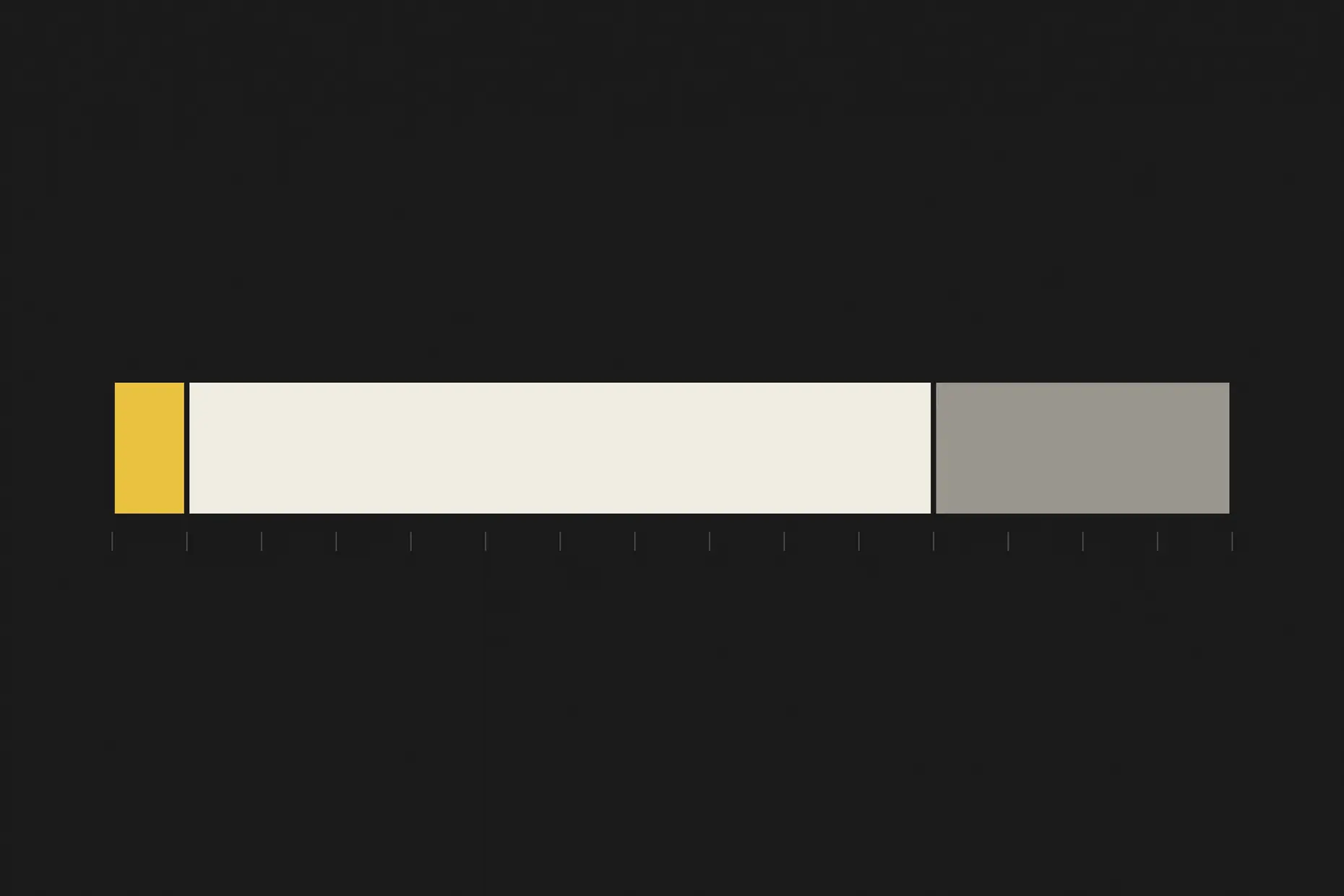
I run this format across 15 working days and three phases. Adapt the day count to your own team’s pace: the order of the work matters more than the exact calendar.
Gather your current brand assets and guidelines, marketing collateral, competitor analysis, customer research, business strategy documents, a written problem statement, and confirmed attendance from every participant. I have learned that missing preparation does not cost sprint quality. It costs sprint time: the room cannot analyse research that has not arrived.
Invite eight roles: a founder, CEO, or other senior decision-maker; a marketing or brand lead; a product or service specialist; a customer-facing representative; a sales or people representative; a strategy facilitator; a creative director with visual designers; and a brand copywriter. I will not run a sprint without someone in the room who can approve the tagline. Without that person, the sprint produces a draft, not a decision.

Open the value proposition canvas before touching any visual work. Map the customer profile: the jobs customers are trying to accomplish, the pains or risks they face, and the gains or outcomes they seek. Map the value map against it: what you offer, how it relieves those pains, how it creates those gains, and where the fit is weakest.
Define purpose, vision, mission, and values as a group: why the organisation exists beyond profit, the future it is working towards, what it does to create that future, and the principles that guide its decisions. Map the competitive field next: who the direct and indirect competitors are, which dimensions matter most to customers, where competitors currently sit, and what you can credibly claim that they cannot, with evidence to support it.
Run the Golden Circle to order the argument: why (purpose, cause, or belief), how (your differentiated approach), then what (your products and services). The model itself says nothing about who you are serving, and critics such as Glyph Marketing and Organisational Physics have argued that without a defined audience, the how stays directionless and the what fails to resonate. I run the sequence against the customer profile from the value proposition canvas above, so why, how, and what are built for a named audience rather than argued from belief alone.
Draft three levels of statement from it: a one-line description of what you do, a trueline stating the distinctive truth you believe, and a tagline that expresses the brand’s essence memorably.
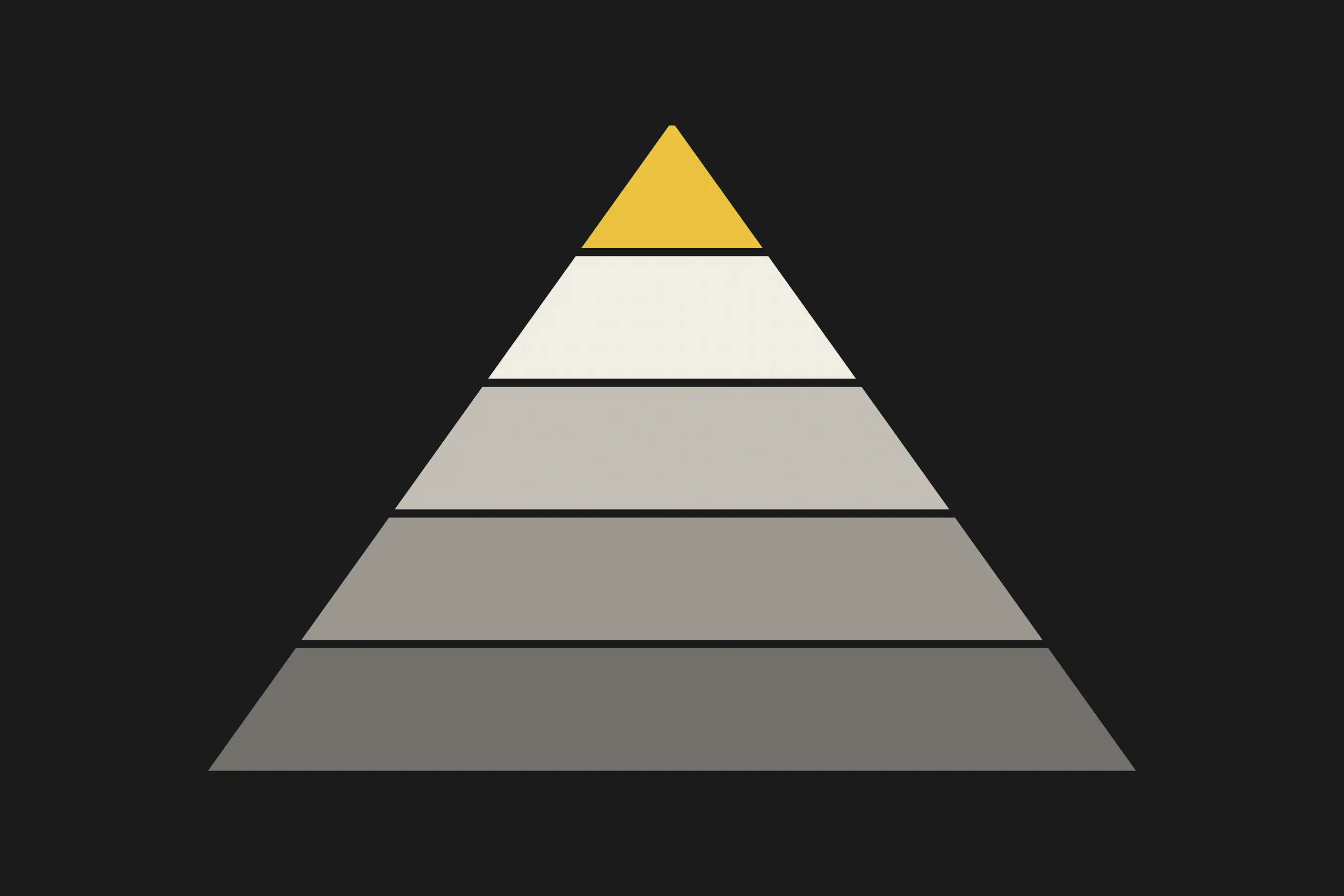
Close the day by building the brand pyramid, moving from attributes (demonstrable facts) through functional benefits and emotional benefits to brand personality and a single brand essence at the top. See the worked example below.
Distil day one’s outputs into a creative brief covering strategic context, audience insights, competitive positioning, brand personality, and any mandatory constraints. Explore several logo and mark directions, narrow to the strongest, and refine it with technical precision.
Build the colour system: a primary palette, a secondary palette for flexibility, and documented accessibility and contrast rules. Build the typography system alongside it: a primary typeface for display and headlines, a secondary typeface for body content, and a defined hierarchy and scale for both digital and print use.
Define the visual language: photography style, illustration approach, iconography, and any patterns, textures, or motion principles the brand needs. Apply the finished system to real formats: business cards and stationery, a website homepage concept, social templates, a presentation template, and an email signature. I never ask a stakeholder to approve a brand in the abstract; they see it working before they sign off.

Write the communication strategy: priority channels, key messages by audience, proof points, calls to action, and initial campaign ideas. Set co-branding guidelines: criteria for evaluating partners, acceptable logo relationships, and the rules that protect brand integrity when working alongside another organisation’s mark.
Define the verbal identity: voice principles, how the language differs from competitors, headline and body-copy style, preferred terminology, and guidance for functional content such as error messages. Build the implementation plan last: internal education, asset distribution, named brand champions, rollout timing, priority touchpoints, and an announcement strategy.

Take a mid-sized support-software company running phase one. Its value proposition canvas surfaces one attribute customers keep repeating unprompted: the team answers within minutes, any time, any day. The pyramid carries that fact upward, one layer at a time.
| Layer | Purpose | Example |
|---|---|---|
| Attributes | Provable features and facts | “24/7 customer support” |
| Functional benefits | Practical results | “Help whenever you need it” |
| Emotional benefits | The customer’s emotional payoff | “Peace of mind” |
| Brand personality | Human characteristics | “Caring and responsive” |
| Brand essence | The central organising idea | “Always there for you” |
“Always there for you” only works as an essence because “24/7 customer support” is a fact the company can demonstrate. A pyramid built top-down, essence first, produces a line that sounds good and proves nothing.
I have seen a sprint fail first when the room lacks real authority. If the person who can approve the tagline isn’t present and empowered that day, I watch the sprint produce a draft that gets re-litigated afterwards by people who were never in the room. The whole advantage of compressing the timeline disappears.
It fails second when the visual work outruns the strategy. I do not let phase two start before the phase one statements are genuinely agreed, not just drafted, because a polished identity built on an unresolved argument only looks finished. That argument always resurfaces during rollout, when reopening it is far more expensive.
It fails third as a substitute for research the room does not already have. A sprint compresses the synthesis of existing knowledge into a fixed calendar; it does not generate that knowledge from nothing. I will not run one without customer research and competitor analysis already in hand, because what comes out the other end is confident-sounding statements built on assumption rather than evidence.
It fails fourth after the room closes. A sprint’s output is a set of documents and a system, not an adopted brand. I tell every client that internal training, asset rollout, and stakeholder buy-in outside the room take real time, and skipping that work undoes the speed the sprint bought.

a time-boxed, workshop-led process that compresses brand strategy, verbal identity, and visual identity development into a fixed engagement with a fixed team.
it depends who is running it. My format runs 15 working days across three phases, while Jake Knapp’s own published Brand Sprint exercise runs about three hours. The two are different tools with the same name.
a senior decision-maker able to approve the outputs on the day, a marketing or brand lead, a product or service specialist, a customer-facing representative, a sales or people representative, a strategy facilitator, a creative director with visual designers, and a brand copywriter.
no. It compresses the synthesis of research you already hold into a fixed calendar. Running a sprint without that research in hand produces statements built on assumptions.
no. The sprint produces the strategy, the identity system, and the guidelines. Internal training, asset rollout, and stakeholder adoption outside the room still have to happen before the brand is live.
| Fact | Detail |
|---|---|
| Term | Brand sprint, also called a brand strategy sprint |
| Sprint format it borrows from | The design sprint, the five-day product-validation process Jake Knapp developed at Google Ventures and published with John Zeratsky and Braden Kowitz in “Sprint” (2016) |
| Knapp’s own “Brand Sprint” | A separate, shorter published exercise of about three hours, built around the Golden Circle |
| My duration | 15 working days, across three phases |
| My typical participants | Eight roles, from a senior decision-maker through to a brand copywriter |
| Core outputs | Brand strategy statements, a brand pyramid, a visual identity system, and rollout guidelines |

A design sprint is a five-day process that takes a team from a business problem to a tested prototype, revealing whether an idea works before it is built.
Read it
A design system is a governed set of reusable components, patterns and rules that a team uses to build consistent digital products at scale, and it is neither a static style guide nor a component library on its own.
Read it
A content audit is a catalogue of every piece of content you own, scored against what it is supposed to do, so you can decide what to keep, fix, merge or kill.
Read it
User research is the systematic study of what users do, need and struggle with, combining qualitative depth with quantitative scale to ground design in evidence.
Read it