
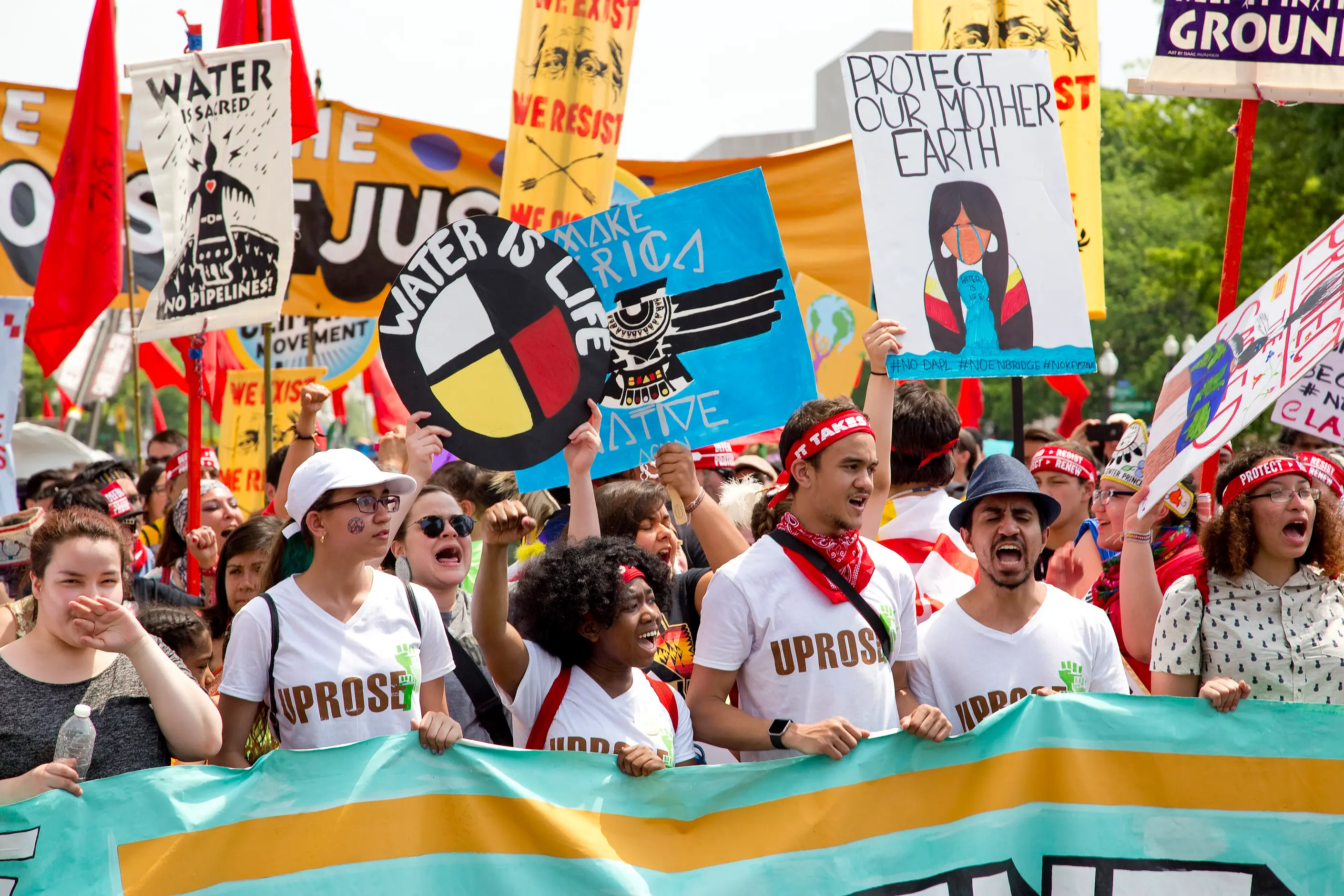
2026-09-15
Nural Choudhury
Climate-conscious design means weighing a decision’s climate impact across materials, manufacturing, the circular economy, digital services, and communications before the decision is locked in, rather than after it ships.
This page covers integrating climate impact into design decisions across materials, manufacturing, circular economy, digital services, and communications. Where a website’s own footprint is the subject, sustainable design covers page weight, hosting, and carbon measurement in technical, sourced detail, so I do not repeat those figures here.
a way to weigh environmental consequence into a decision before it is fixed, whether that decision is a material specification, a packaging brief, a product’s end-of-life design, or a public claim about its impact.
any point where you specify a material, choose between linear and circular product logic, run a life-cycle comparison between options, or write a claim about environmental benefit.
find where the impact concentrates before you act. Most projects spread design effort evenly across a product’s life and miss the one stage that dominates the total.
A material choice determines most of what follows: its extraction impact, its processing energy, and its eventual fate. Five principles cover most of the decision.
| Principle | What it means |
|---|---|
| Recycled content | Avoids extraction impact and usually cuts processing energy. Specify it wherever it is available |
| Renewable source | Comes from a regenerating source such as managed forestry or agricultural waste. Climate-positive only if growth absorbs more carbon than processing releases |
| Local sourcing | Cuts transport emissions and improves supply chain visibility, most valuable for heavy or bulky materials |
| Low-energy processing | Some materials need intensive processing, aluminium smelting, cement, synthetic chemistry. Others need little: timber, stone, natural fibre |
| Durability | A material that lasts longer amortises its impact over more use, so the replacement cycle matters as much as the material itself |
Individual materials carry different profiles even within one category.
| Material | Climate profile |
|---|---|
| Aluminium | High energy to produce virgin. Recycled aluminium avoids most of that energy cost |
| Steel | Significant production emissions. Recycled steel is much lower, and a long service life can offset the impact |
| Copper | Intensive extraction, but recyclable and essential for electrical use |
| Fossil-based plastic | Petroleum-derived, persistent in the environment, and recyclability varies by type |
| Recycled plastic | Substantially lower impact than virgin, though quality can limit some applications |
| Bio-based plastic | Renewable feedstock, not automatically biodegradable, and can carry land-use costs |
| Wood | Stores carbon while growing. Depends on sourcing from managed forestry |
| Natural fibre | Impact varies widely: cotton is water-intensive, hemp is low-input |
| Concrete | Large carbon footprint, driven by cement production |
| Glass | Energy-intensive to produce, but recycles indefinitely in most systems |
A material claim needs the same scrutiny you would apply to any other unverified specification. “Eco-friendly” names nothing on its own: ask what it is compared against, which impacts it covers, and whether a body such as the Forest Stewardship Council, the Global Recycled Standard, or Cradle to Cradle stands behind it. Below, I cover the wider pattern of overclaiming in messaging rather than in materials, under climate communication.

The linear model, extract, manufacture, use, dispose, assumes infinite resources and an infinite capacity to absorb waste. Neither assumption holds. Circular design keeps material in use instead: eliminate waste by design, keep materials in use, and let natural systems regenerate rather than deplete.
| Approach | What it requires |
|---|---|
| Design for disassembly | Reversible fasteners, minimal material types, and clear labelling for sorting |
| Design for recyclability | Materials proven recyclable in the infrastructure that exists locally, not in theory alone |
| Design for composting | Materials that break down under a stated condition, home or industrial, rather than an assumed one |
| Design for repair | Replaceable wear parts, available documentation, and access that invites intervention rather than blocking it |
| Design for reuse | Durability across multiple cycles, plus a system for collection and redistribution |
None of this works from a single product. Collection infrastructure, processing capacity, market demand for recycled material, and a business model that rewards durability must align, which is why circular design also depends on the model underneath it.
| Business model | Mechanism |
|---|---|
| Product as service | The manufacturer keeps ownership and bears the cost of a short-lived product, which gives it an incentive to build durable |
| Take-back programme | The manufacturer accepts the product back for recycling or refurbishment |
| Refill and reuse | A concentrated product paired with a durable, returnable container |
| Extended producer responsibility | Regulation holds the producer responsible for end-of-life, ahead of any voluntary programme |
A life-cycle assessment traces a product’s impact from raw material extraction through manufacturing, distribution, use, and end-of-life, so improving one stage doesn’t quietly shift the impact to another. Optimise for a lighter material and you may have specified one that costs more energy to process. LCA is how you find that out before you commit, not after.
| Stage | What it covers |
|---|---|
| Raw material extraction | Mining, drilling, harvesting, or growing. Energy, land, water, and pollution impacts concentrate here |
| Manufacturing | Processing raw material into product: energy, emissions, waste |
| Distribution | Transport mode and distance. Shipping and air freight differ by an order of magnitude |
| Use phase | For a vehicle or an appliance, this stage usually dominates the total footprint |
| End of life | Recycling, composting, landfill, or incineration. A designed pathway recovers value; an undesigned one is waste |
Take a packaging brief for a single-use item. A quick look favours a lighter, recycled-content plastic over glass. Still, the full comparison usually turns on the use phase and end-of-life stages instead: glass adds transport weight but recycles indefinitely in most systems. In contrast, a lightweight plastic may not be recyclable in the region where the product ships. The hotspot, not the material’s reputation, should decide the choice.
A full assessment is expensive and slow. In practice, focus on the hotspot, use the comparative data you already have, and make reasonable assumptions instead of waiting for complete figures. A simplified assessment that ships beats a perfect one that never finishes.
Climate communication has to carry seriousness without producing paralysis. A reader needs to understand the scale of the problem while still believing that their own action changes something.
| Principle | What it means |
|---|---|
| Urgency with agency | Convey the scale of the problem without leaving the reader feeling that nothing they do matters |
| Specific and concrete | An abstract statistic fails to motivate. A relatable, specific example engages |
| Solutions-oriented | Doom messaging exhausts and alienates. Framing around what can still be done keeps people engaged |
| Honesty | Acknowledge uncertainty while stating established fact. Exaggeration is credible only until it is checked |
Greenwashing is any claim, explicit or implicit, that presents a product or an organisation as more environmentally responsible than it is. It does more damage than one false claim on its own: it erodes trust in every environmental claim that follows, including the honest ones, and it lets harmful practice continue under cover of a good-sounding label.
| Pattern | What it looks like |
|---|---|
| Vague claim | “Eco-friendly” or “natural” with no baseline and no measure attached |
| Irrelevant claim | Something true but unimportant, highlighted to distract from what is not addressed |
| Hidden trade-off | One benefit emphasised while a related harm goes unmentioned |
| False or borrowed certification | A badge or label that implies independent verification it never received |
| Unproven comparison | “Better for the planet” with no stated comparison and no evidence behind it |
| Suggestive imagery | Leaves, green tones, or nature scenes standing in for a substantiated claim |
The fix is specificity: a verifiable claim, an acknowledged trade-off, a real certification, and a claim that reflects the organisation’s overall practice rather than one flattering example.
Design can also shift behaviour directly, alongside what you say. Make the sustainable option the default rather than an opt-in, and remove the friction that makes it harder than the conventional choice. Make the impact visible, through a label or a calculator, because an impact nobody can see does not change what anybody does.
No single practice fixes a system on its own. A durable product inside a linear economy, or an efficient website running on a fossil-powered grid, still falls short of what is possible. Work at the product level and the system level together.
Find the hotspot before you choose a lever. Run a life-cycle comparison, even a simplified one, before you commit to a material or a process.
Specify materials against evidence, not language. Ask what a claim compares against and who verifies it, rather than accepting “eco-friendly” as a specification.
Build in disassembly, repair, and material identification from the first sketch. These are geometry decisions, and they are far cheaper to make early than to retrofit later.
Treat a digital product’s footprint as a design decision from the outset, then hand the technical work, hosting, page weight, and measurement to sustainable design rather than reinventing it here.
Match your claim to your change. State only what the finished product does, and say plainly what you have not yet solved.
You must push for system-level change alongside your product-level choice: the grid, the recycling infrastructure, and the regulation that determines whether your saving is realised.

I have watched a life-cycle assessment get scoped after someone already knew which answer they wanted. Choose the boundary, the functional unit, or the impact category last, once you have seen how each choice moves the result, and you have not run an assessment. You have built a justification.
I have also seen a material substitution get celebrated while the product’s lifespan quietly fell. Recycled aluminium instead of virgin is a real saving, until the redesign that adopted it also made the product easier to discard and harder to repair, so it gets replaced twice as often. The material savings and the loss from the shorter life have to be compared against each other, not announced separately.
The third failure is a claim that outpaces the change. A team ships one sustainable feature and describes the whole product as sustainable, or promises a target before the operational work that would hit it exists. That claim then has to survive contact with anyone who checks it, and often it does not.
Is climate-conscious design only for large organisations? No. A freelancer or a small studio controls material choices, a digital footprint, and a communication strategy just as fully as a large organisation does. The power is the same; only the scale differs.
Does designing for climate mean accepting lower quality? The opposite, in my experience. A durable, repairable product usually serves the user better as well as the climate, and a communication strategy that resists greenwashing builds more durable trust than one that overclaims.
Where do I start if this is new to me? Find your product’s largest impact first, usually the material or the use phase, and put your design effort there before spreading it evenly across every stage. Direction matters more than completeness on day one.
Can I do this within a tight budget? Yes. Durability, local sourcing, and material efficiency often cost nothing extra and can even reduce cost, so start there before any paid intervention.
How do I tell a genuine environmental claim from a hollow one? Ask what it compares against, which impacts it includes, and which named body verifies it. A claim with no comparison and no verification is not evidence, no matter what it says.
| Item | Where it stands |
|---|---|
| Recycled aluminium energy savings | 95 per cent less energy than virgin production (International Aluminium Institute) |
| Recognised third-party material certifications | Forest Stewardship Council, Global Recycled Standard, and Cradle to Cradle |
Sustainable design in digital work means cutting the energy and hardware a product needs: lighter pages, fewer requests, longer device life, and honest measurement of the savings.
Read it
Material Design is Google’s design language for building interfaces: a codified set of colour roles, type scale, shape rules, elevation and motion, shipped as ready-made components for Android, Flutter and the web.
Read it
Packaging design is the discipline of shaping a product’s container and its printed surfaces so the object protects what is inside, states what it is, and earns a second look next to its competitors on a shelf.
Read it