

2026-09-15
Nural Choudhury
Steampunk is a retro-futurist aesthetic built from Victorian industrial machinery: brass, exposed gears, clockwork and leather, imagining a nineteenth century whose technology went further than it did.
It is a late-twentieth-century invention, not a historical style. Victorian design is what the nineteenth century made; steampunk is a modern act of imagination that borrows Victorian form to picture a mechanical future that never happened.
brass, copper and bronze rather than chrome or aluminium, aged with visible patina. Exposed gears, cogs and clockwork mechanisms, sized and meshed as if they turn. Leather strapping, wood casing and glass dials borrowed from Victorian instruments. Goggles, pocket watches and explorer gear standing in for the inventor-adventurer figure: ornate serif type and scrollwork borders drawn from period print.
Victorian scientific romance and 1980s speculative fiction, not the Victorian era itself.
products, environments and graphics that want to argue for visible mechanism, craft and repairability against sealed, disposable technology, where an explicit fictional or nostalgic frame is welcome.
Steampunk staked out its imaginative territory before the name existed. Jules Verne’s Twenty Thousand Leagues Under the Sea (1870) and From the Earth to the Moon (1865), and H.G. Wells’s The Time Machine (1895) and The War of the Worlds (1898), imagined advanced technology through nineteenth-century scientific understanding. These scientific romances gave later writers a Victorian setting already stretched toward speculation.
The term itself arrived in the late 1980s, coined by author K.W. Jeter to describe a wave of fiction revisiting Victorian settings with speculative machinery. Jeter’s novels Morlock Night (1979) and Infernal Devices (1987) sat alongside work by Tim Powers and James Blaylock in establishing the genre. William Gibson and Bruce Sterling’s The Difference Engine (1990), which imagines Charles Babbage’s mechanical computer succeeding a century early, became the genre’s defining novel.
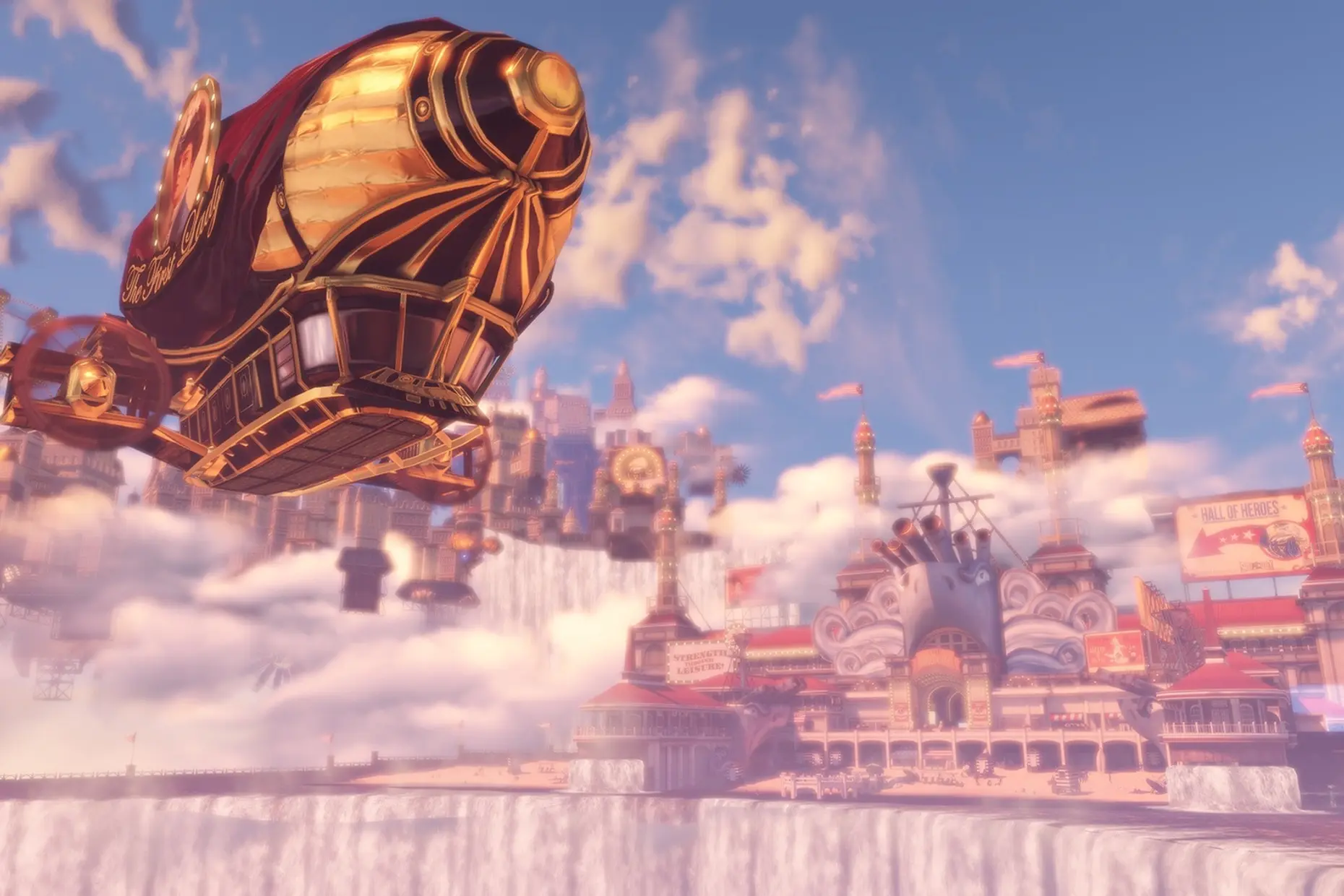
From fiction, the aesthetic moved into visual media and then into objects. Film and television gave it mass visibility, including Wild Wild West (1999), The League of Extraordinary Gentlemen (2003) and Howl’s Moving Castle (2004). Video games such as Bioshock Infinite, Dishonoured, Arcanum, and Frostpunk built explorable steampunk worlds that further solidified its visual conventions. Alongside this, a maker movement adopted the practice directly: craftspeople modifying keyboards, lamps and everyday electronics with brass fittings and exposed mechanisms, a practice known as steampunking. A cosplay and convention subculture grew around it, treating steampunk as an immersive alternative history rather than a look to be applied and left.

| Element | What this style does | The tell |
|---|---|---|
| Colour and material | Warm metallics: brass, copper, bronze, deliberately aged | Visible patina and oxidation rather than clean, factory-fresh metal |
| Form and shape | Complex, often over-elaborate machinery where a simpler mechanism would do | Gears sized and positioned as if they mesh and turn |
| Typography | Ornate Victorian-period serif and decorative lettering | Scrollwork, filigree and period flourish rather than a clean contemporary face |
| Layout and composition | Dense, instrument-panel arrangement: dials, borders, mechanical framing | Gear-decorated borders and frames used as structural elements, not stickers |
| Materials and texture | Leather straps, wood casing, glass dials, aged paper | Natural material paired directly against metal, softening the mechanism |
| Imagery and ornament | Goggles, pocket watches, compasses, explorer and inventor kit | The goggle-wearing adventurer figure standing for agency over technology |
The vocabulary hangs together only when the mechanism is imagined as functional. A gear glued on for texture, with no plausible relationship to the gears around it, reads as decoration rather than machinery, and steampunk’s own internal critics call this out directly.

| Neighbour | What it shares | What separates them |
|---|---|---|
| Victorian design | Ornament, materials and typography drawn from the same nineteenth century | Victorian design is the real decorative style of its period; steampunk is a later fiction that reuses its forms to imagine machinery the era never built |
| Mystical western design | A Victorian-adjacent, invented-tradition aesthetic layered over historical reference | Mystical western design draws on occult and esoteric symbolism; steampunk draws on mechanical and industrial imagination, gears rather than sigils |
| Y2K design | Both are retro-futurisms: a past imagining a technological future that did not arrive this way | Y2K looks forward from the 1990s toward chrome, translucency and digital optimism; steampunk looks backward, imagining the Victorian era reaching that future first, in brass and clockwork rather than plastic and screens |
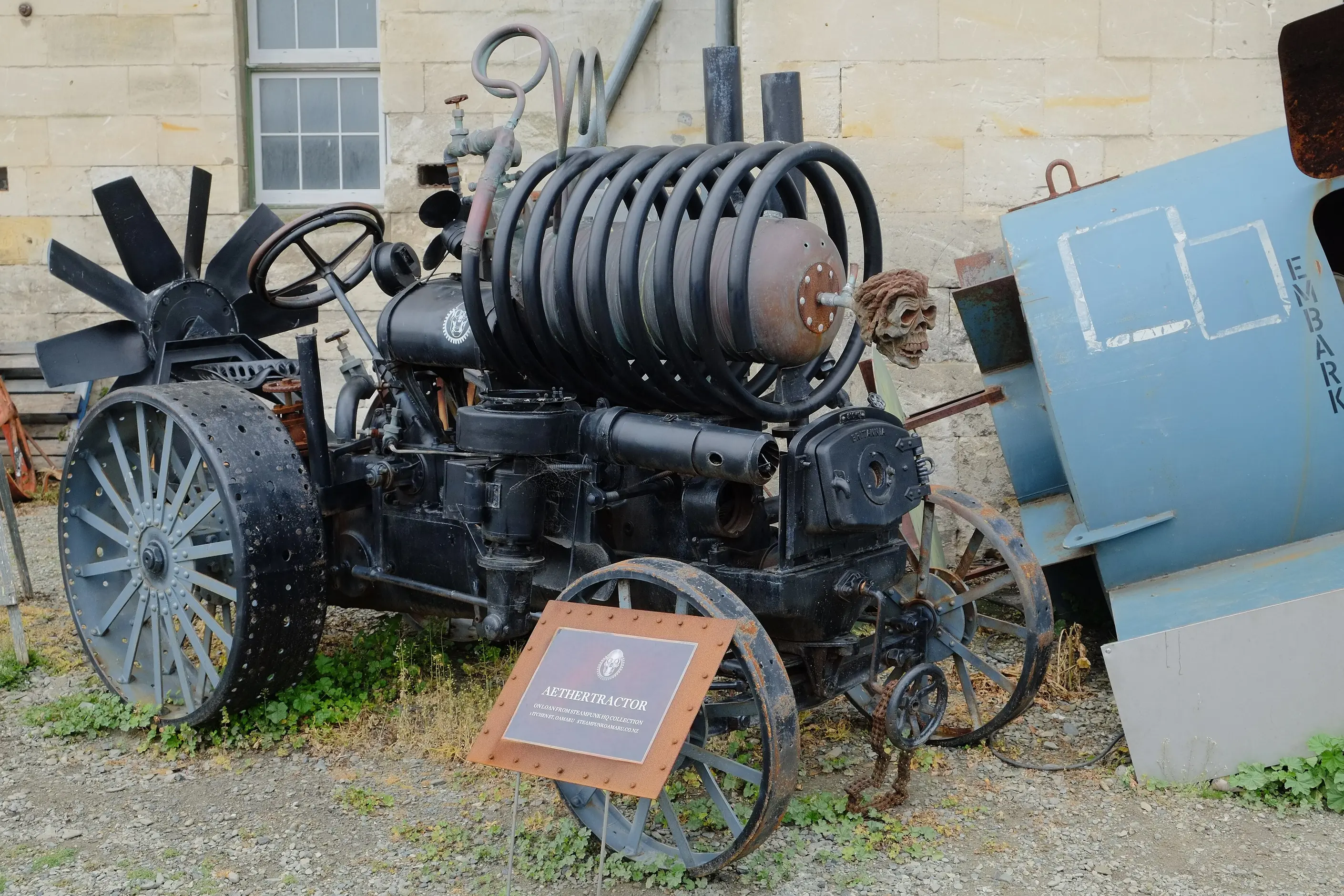
Give every visible mechanism a plausible logic before you decorate with it. Gears must vary in scale the way a real mechanical relationship would, and each one must look capable of turning against its neighbour, not merely filling space.
Hold a single historical anchor and do not drift from it. Mixing later ornament, an Art Deco typeface on a device supposedly built in the 1870s, breaks the alternate-history logic that makes the aesthetic coherent, so research real Victorian typography, fashion and object design before departing from it.
Use materials that read as what they claim to be. Plastic painted to look like brass fails because its weight and reflection give it away; use real brass, copper and leather where the object is physical, and render digital surfaces with enough texture and reflection detail to convince.
Age surfaces with intent, not uniformly. Wear must follow use: polish where a hand would rub, oxidation where the piece would sit exposed, tarnish collecting in recesses. Random, even ageing reads as a filter, not history.
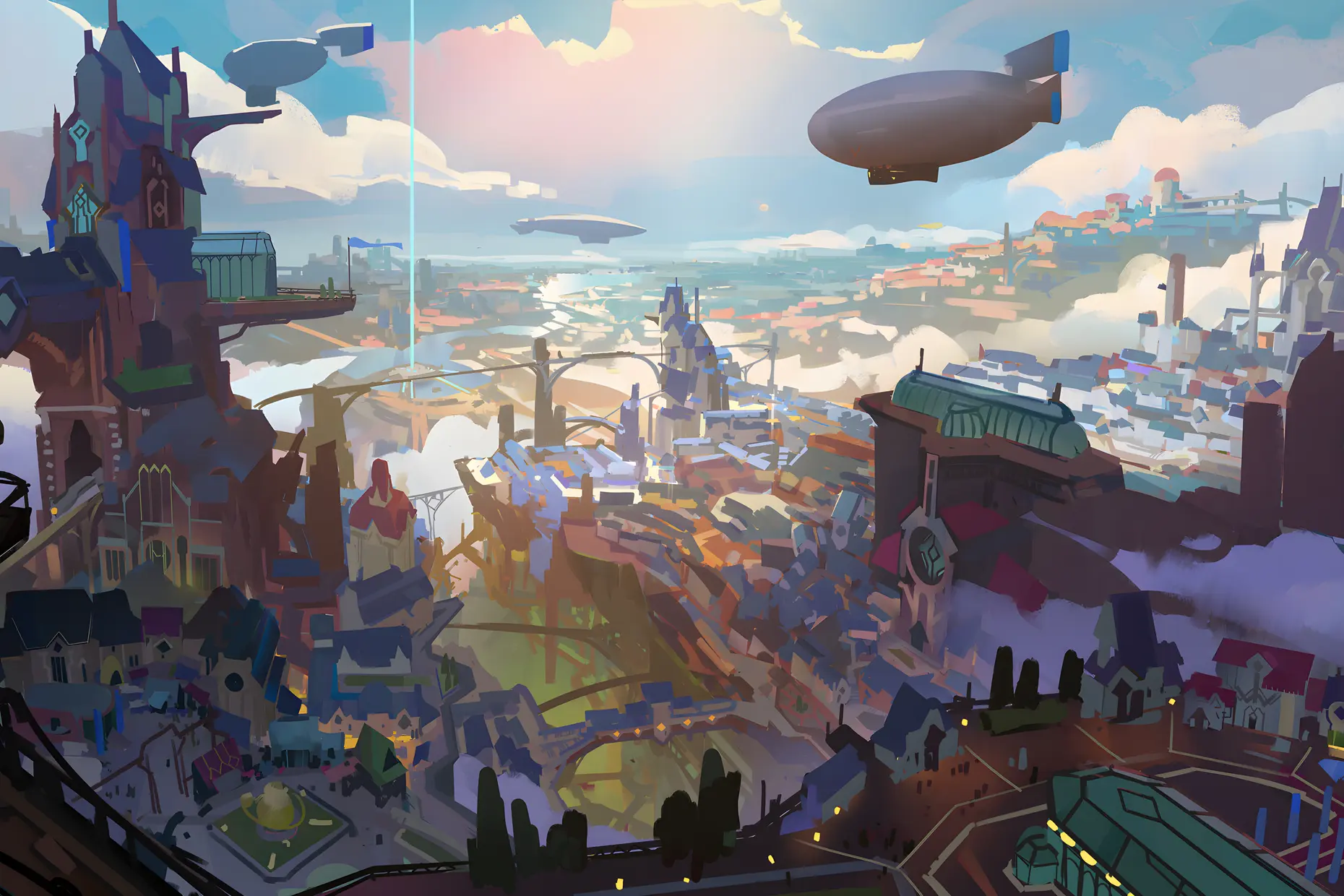
The aesthetic’s own community names its worst failure as gear-glueing: decorative gear shapes applied with no mechanical logic or purpose, at the expense of the imaginative coherence steampunk depends on. This is not an incidental risk. It is the default outcome when a designer reaches for the vocabulary without the world-building behind it.
Steampunk also carries a narrower ceiling than it looks like it should. Its density, ornament and insistence on visible mechanism make it a poor fit for interfaces that must carry dense data cleanly, or for brand contexts that need restraint over spectacle. Pushed into those contexts,s it reads as costume rather than argument, a theme-park signifier standing in for the ideas about craft and repairability that motivated it in the first place. Used well, it is a specific fiction with a specific point to make about visible technology. Used carelessly, it collapses into brass wallpaper.
Is steampunk a Victorian style? No. It is a late-twentieth-century speculative-fiction aesthetic that borrows Victorian form and vocabulary to imagine a technology the nineteenth century never built.
What is gear-glueing and why does it matter? It is the practice of applying gear shapes decoratively with no mechanical logic behind them. Steampunk’s own critics treat it as the aesthetic’s characteristic failure, because it drops the imaginative coherence that separates world-building from surface decoration.
Why brass and copper instead of chrome? Brass and copper age visibly, developing patina that reads as character rather than damage. The warm metallic palette also matches the Industrial Revolution’s own metal tones, which chrome and aluminium do not.
Where should I avoid using steampunk? Interfaces carrying dense data, and brand contexts that need restraint, since the aesthetic’s density and ornament work against clarity in both.
How is steampunk different from dieselpunk or other retro-futurisms? Steampunk anchors specifically to Victorian-era steam and clockwork technology. Related retro-futurisms anchor to different periods and machinery, and each carries its own historical logic that shouldn’t be mixed with another’s.
| Fact | Detail |
|---|---|
| Term coined | Late 1980s, by author K.W. Jeter |
| Early defining works | Jeter’s Morlock Night (1979) and Infernal Devices (1987) |
| Genre-defining novel | Gibson and Sterling’s The Difference Engine (1990) |
| Literary precursors | Jules Verne and H.G. Wells, nineteenth-century scientific romance |
| Signature materials | Brass, copper, bronze, leather, wood, glass |
| Signature failure mode | Gear-gluing: decorative mechanism with no mechanical logic |

Victorian design is the ornate, eclectic visual culture of Britain and its export markets during Queen Victoria’s reign, 1837 to 1901, when steam-powered printing and chromolithography made heavy ornament affordable to a middle class that had never been able to buy it before.
Read it
Mystical Western design fuses American frontier and cowboy iconography with celestial and esoteric symbolism, set against the specific geography of the American Southwest, to suggest that the desert itself is a place of spiritual encounter.
Read it
Y2K design is the visual language of computers, gadgets, fashion, and web culture from roughly 1997 to 2003, built from translucent coloured plastic, chrome and metallic surfaces, rounded bubble forms, and a saturated synthetic palette that together expressed a moment when digital technology looked purely exciting rather than troubling.
Read it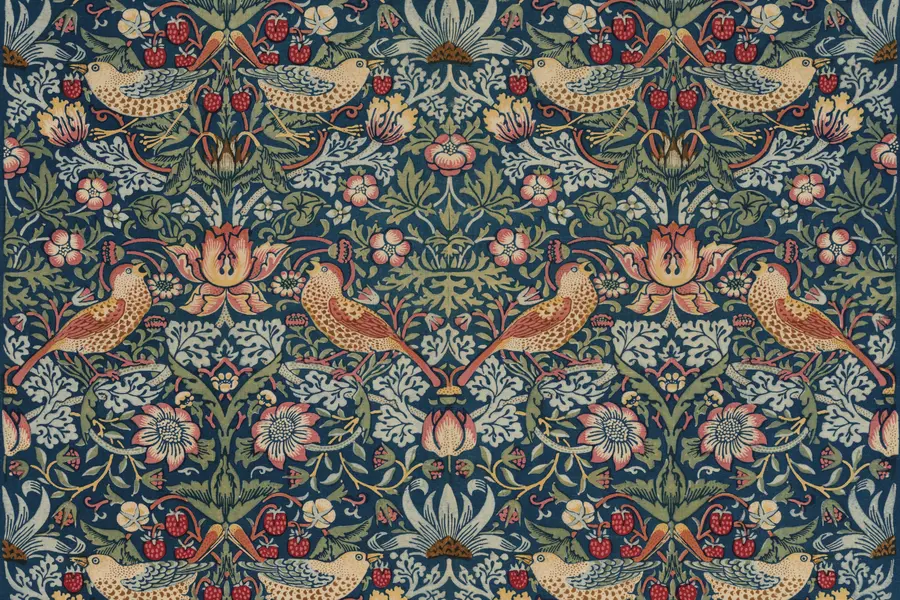
The Arts and Crafts movement is a design and social reform movement that began in Britain in the second half of the nineteenth century, built around dense botanical patterns, honest materials and visible handcraft, as a direct reaction against industrial factory production.
Read it
Gothic design is the pointed-arch, vertically emphasised architecture, manuscript illumination and decorative art of Latin Christian Europe, built from the 1140s to the early sixteenth century around stained glass, tracery, and dramatic light.
Read it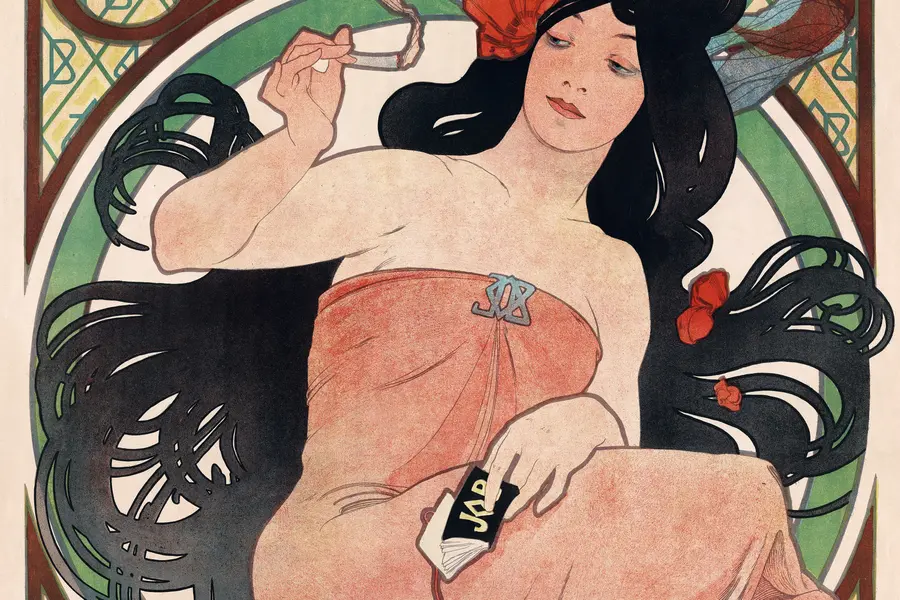
Art Nouveau is an international decorative style that ran from roughly 1890 to 1910, replacing the borrowed ornament of historical revivals with a single vocabulary drawn from plant growth, insect wings and the female form.
Read it
Synthwave design is a retro-futurist visual style built decades after the decade it evokes: a neon, grid-lined, chrome-lettered vision of the 1980s assembled in the late 2000s from arcade games, science-fiction film and electronic music.
Read it