
2026-09-15
Nural Choudhury
Parametric design defines relationships among adjustable parameters to generate responsive, optimisable, and varied design outcomes.
Unlike traditional design, which specifies fixed geometry, parametric design produces systems that generate artefacts. The fundamental difference: traditional design draws what you want; parametric design defines what you want things to do in relation to each other, then lets the system generate specific instances. Parametric design is strongest in architecture and product design, where constraints (structural loads, environmental conditions, fabrication limits) drive complex forms that manual design could not achieve.
Smooth complexity with no awkward joints. Systematic variation that follows visible logic. Computational precision in curves and transitions. Forms where detail at any scale follows consistent mathematical logic.
Rooted in computational geometry and architecture since the 1990s. Accelerated by software tools (Grasshopper, Rhino, Houdini) and enabled by digital fabrication. Now applies across product design, fashion, graphic design, and digital experiences.
Complex forms driven by constraints. Rapid exploration of design variations. Systems that respond to environmental data or user parameters. Mass customisation: each instance differs yet maintains structural logic.
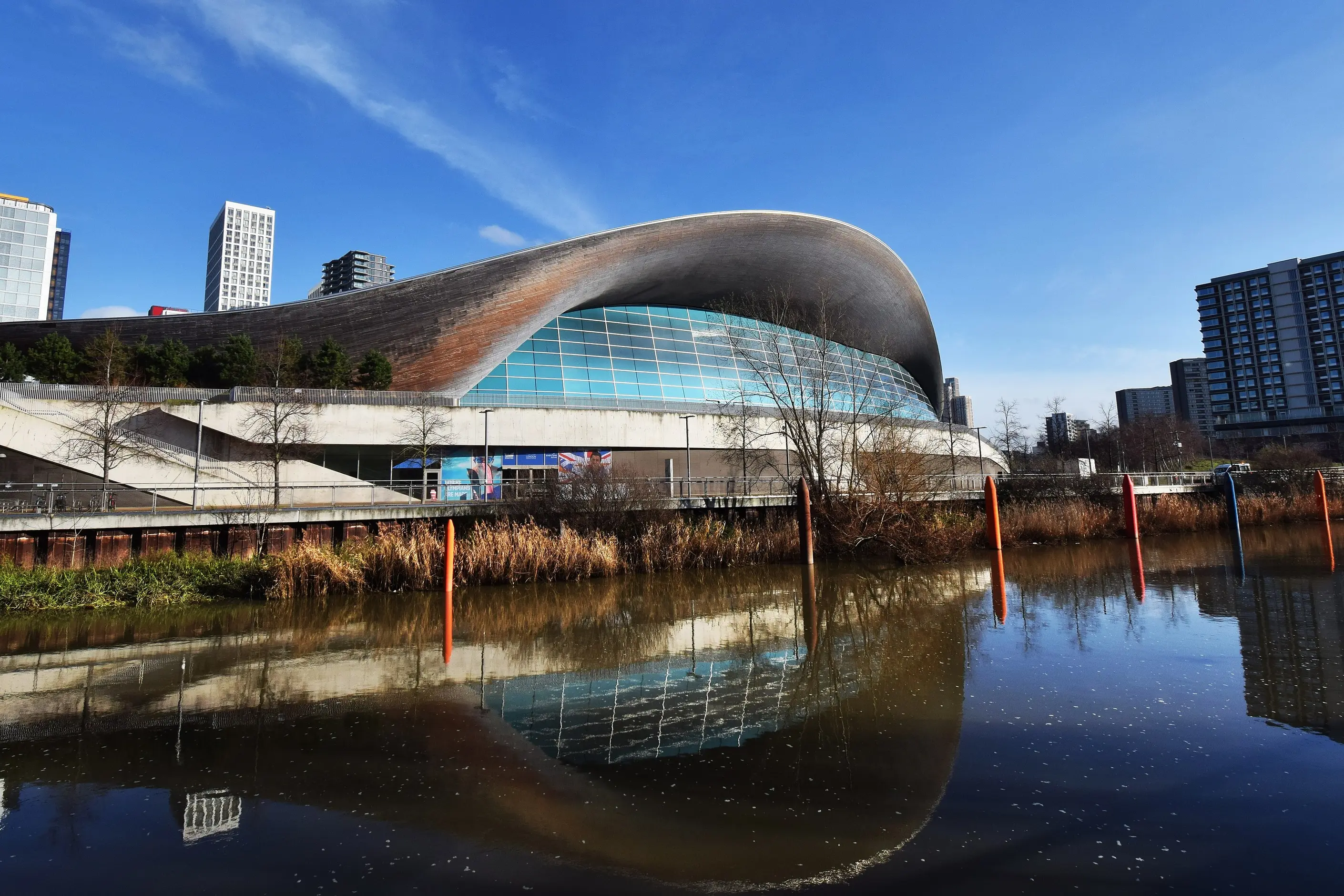
Parametric thinking emerged from computational geometry in architecture through tools like Grasshopper (developed for Rhino in the early 2000s) and from building information modelling. The shift from geometry as static form to geometry as relationship began in academic research, then moved into practice through firms led by Zaha Hadid and Patrik Schumacher, who used parametric approaches to generate flowing forms from site constraints and structural logic. Their buildings demonstrated that parametric systems could solve real architectural problems: responding to environmental conditions, optimising performance, and creating forms that traditional drawing methods could not feasibly achieve.
The methodology accelerated through software democratisation; Dynamo extended BIM workflows for structural and MEP integration, and Houdini brought procedural generation from visual effects into industrial and product design. Each tool adapted parametric thinking to its discipline: architecture focused on geometry and constraint satisfaction; product design emphasised customisation; graphic design applied it to layout systems and pattern generation.
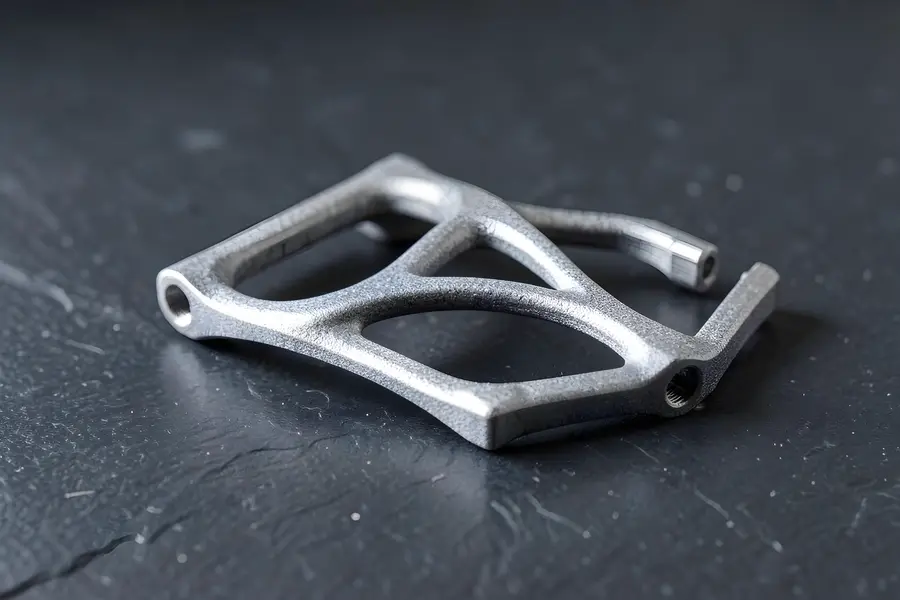
Digital fabrication technologies made parametric geometry manufacturable. Where parametric forms once existed only in software, CNC milling, 3D printing, and robotic fabrication let designers realise geometries in material. This convergence of parametric generation with digital fabrication (designers defining systems, machines making the results) created a legitimate design methodology rather than an academic experiment. The workflow became practical: parametric design in software, direct fabrication of outputs, iteration on actual artefacts.

| Element | What parametric does | The tell |
|---|---|---|
| Form and shape | Generates complex geometry from rule-based relationships. Forms respond to constraints (structural, environmental, functional). Enables smooth transitions and gradient variation impossible to model manually. | Smooth curves with no arbitrary decisions visible. Forms where every surface follows mathematical logic. Intricacy that emerges from simple rules. |
| Colour | Applies colour systematically: hue, saturation, or value shifting based on spatial position, structural load, or data value. Colour variation follows relational logic rather than aesthetic whim. | Colour gradients that correlate to form or position. Systematic colour logic visible across the composition. Colour as an encoded variable, not decoration. |
| Layout and composition | Arranges elements according to parametric rules: spacing responding to context, density gradients across space, components subdividing surfaces systematically. Systematic arrangement emerges from parameter definitions. | Elements that space themselves according to visible logic. Density that concentrates in some areas and disperses in others. Apparent organisation though no manual placement. |
| Materials and texture | Defines material distribution parametrically: thickness responding to structural load, density varying across a form, surface finish changing based on functional requirement. Parametric logic drives material choices. | Thickness or material distribution that correlates to structural sense. Texture or surface quality that varies systematically. Material applied where it is needed, not uniformly. |
| Geometry systems | Builds forms from mathematical definitions: NURBS curves, algorithmic surfaces, tessellation logic, symmetry patterns. Surfaces and subdivisions are equation-based rather than hand-drawn. | Mathematical precision in curves and transitions. Panel divisions that subdivide complex surfaces systematically. Forms generated rather than modelled. |

| Neighbour | What they share | What separates them |
|---|---|---|
| Generative design systems | Both produce multiple variations from system logic. Both enable exploration beyond manual capabilities. Both shift from drawing objects to defining systems. | Generative design systems can be rule-free or AI-driven; parametric design specifically uses explicit parameter relationships. Generative systems often auto-optimise; parametric systems require human curation of outputs. Generative explores a space; parametric navigates it through understood parameters. |
| Biomimetic patterns | Both learn from natural systems. Both can generate complex forms from simple underlying logic. | Biomimetic design imitates natural form or mechanism as reference; parametric design may reference nature but uses computational logic as its method. Biomimicry values biological precedent; parametric values relational mathematics. |
| Sacred geometry | Both use proportional systems and mathematical relationships. Both create complex forms from underlying structure. | Sacred geometry is rooted in historical and cultural meaning; parametric design is rooted in computational possibility and constraint optimisation. Sacred geometry often carries symbolic intent; parametric design is instrumentally driven by function and fabrication. |

Start with design intent, not technique. Ask what the parametric approach solves better than traditional design. Define parameters that connect to constraints: structural load, environmental exposure, user variation, fabrication limits. Build relationships between parameters that reflect real dependencies, not arbitrary connections. Test parameter extremes to ensure all outputs remain valid and meaningful.
Keep parameter ranges bounded. Not every variable needs to vary; strategic fixedness makes meaningful variation stand out. Embed fabrication constraints from the start: minimum material thickness, tool size limits, assembly tolerances. Curate outputs rather than presenting every possibility. The parametric system generates candidates; design judgement selects the best.
Connect the digital system to physical making. Parametric geometry must translate to manufacturing processes. Consult fabricators during design, test buildability of outputs, let material and manufacturing logic inform parameters. Test designs at human scale: how do occupants, users, or viewers experience parametric outputs? Computational precision serves people, not the reverse.
Complexity without purpose. Intricate parametric forms demonstrating technical capability without design justification. When impressive-looking geometry substitutes for functional or communicative intent. Complexity becomes an end rather than a means.
Disconnected parameters. Parameters that feel arbitrary rather than meaningful. Technical variables added because software allows them, not because design requires them. Systems so complex they exceed the designer’s ability to manage meaning.
Fabrication fantasy. Parametric forms generated without considering how they’d be made. Geometries that exist only in software, design divorced from material reality. Digital-only contexts (education, competitions) where parametric systems are built without testing buildability.
Clichéd algorithms. Overused patterns (Voronoi tessellations, geodesic subdivisions) where the tool’s aesthetic signature overwhelms design intent. Blob architecture where every surface is curved and every edge smooth. Parametric wallpaper: surface pattern application without structural or functional purpose.
Is parametric design just for architecture?
Parametric methods originated in architecture, where constraints (structure, climate, site) naturally map to parameters. Product design uses parametric approaches for customisation and structure. Graphic design optimises it for layout systems, pattern generation, and data visualisation. Fashion uses parametric systems for garment fit and textile patterning. The methodology works wherever constraints drive variation and fabrication matters.
When should I use parametric design instead of traditional design?
Parametric approaches add value when you need rapid exploration of variations, when constraints genuinely drive form, when fabrication connects to design logic, or when mass customisation requires customisation at scale. If traditional methods can achieve the same outcome with less complexity, traditional design is the right choice. Not everything should be parametric.
What makes parametric work clichéd?
Parametric becomes cliché when the tool’s signature (certain algorithmic patterns, smooth blob forms) overwhelms design intent, when complexity serves to impress rather than function, when the system generates all variations equally rather than curating toward quality. When technical achievement replaces design thinking.
How do I avoid disconnected parameters?
Every parameter should connect to design intent. Ask: what does this parameter represent? Why should it vary? What does variation communicate or achieve? Remove parameters without clear answers. Map natural dependencies in your design problem before encoding them in the system. Start from design intent, not software capability.
Can parametric systems ensure all outputs are valid?
Embed constraints that bound the parameter space: minimum and maximum values, conditional rules that activate under specific conditions, fabrication limits that prevent impossible geometries. Test extremes to reveal relationship quality. If extreme parameter settings produce nonsense, refine the relationships.
| Fact | Detail |
|---|---|
| Origins | Computational geometry and architecture, 1990s onward |
| Foundational tools | Grasshopper (Rhino, 2007+), Dynamo (Revit), Houdini, Processing, OpenSCAD |
| Key figures | Zaha Hadid, Patrik Schumacher (architecture); extended across disciplines through software democratisation |
| Primary domains | Architecture (façade systems, structural optimisation, spatial planning); product design (customisation, lightweighting); graphic design (layout systems, pattern generation) |
| Related technologies | Digital fabrication (CNC, 3D printing, laser cutting, robotic fabrication); BIM (Building Information Modelling); AI-assisted parametric systems (emerging) |
| Distinguishing principle | Rule-based relationships between parameters produce coherent variation that supports exploration and optimisation beyond manual capability |
Generative design systems set parameters, constraints, and goals, then let an algorithm search the space of possible solutions instead of drawing one outcome by hand.
Read it
Biomimicry is the design practice of studying solutions refined by billions of years of biological evolution- honeycomb load distribution, termite-mound airflow, lotus-leaf self-cleaning- and applying the underlying mechanism, not the natural form, to problems in products, buildings, graphics, and systems.
Read it
Sacred geometry treats certain geometric forms and proportions, among them the golden ratio, the Platonic solids, and the Flower of Life, as evidence of a divine or cosmic order laid over mathematics that is otherwise plain and checkable.
Read it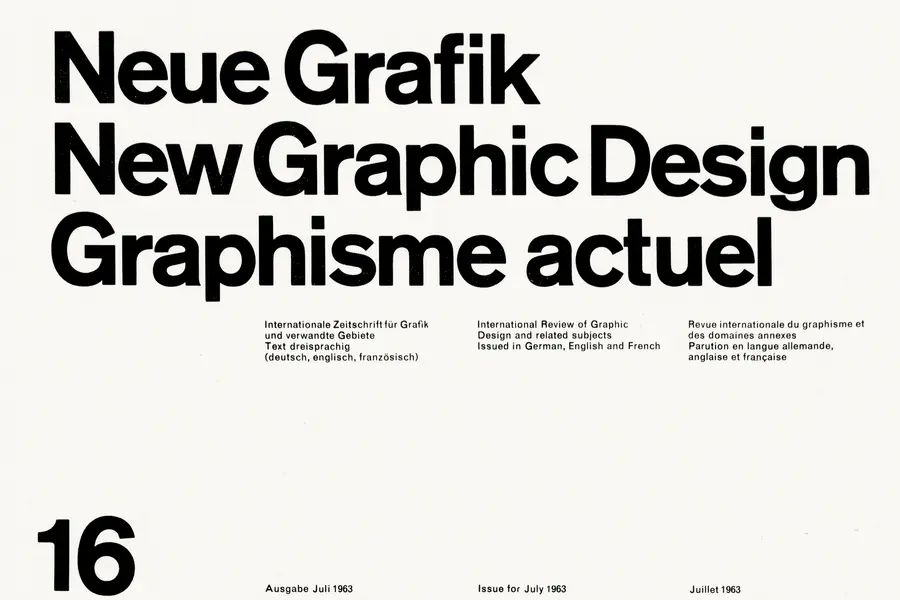
A grid is a system of columns, gutters, margins, and baselines that fixes where content can sit before you place a single element.
Read it
Layout is the arrangement of elements inside a frame: what a viewer sees first, second, and third, and what the space between things does as they look.
Read it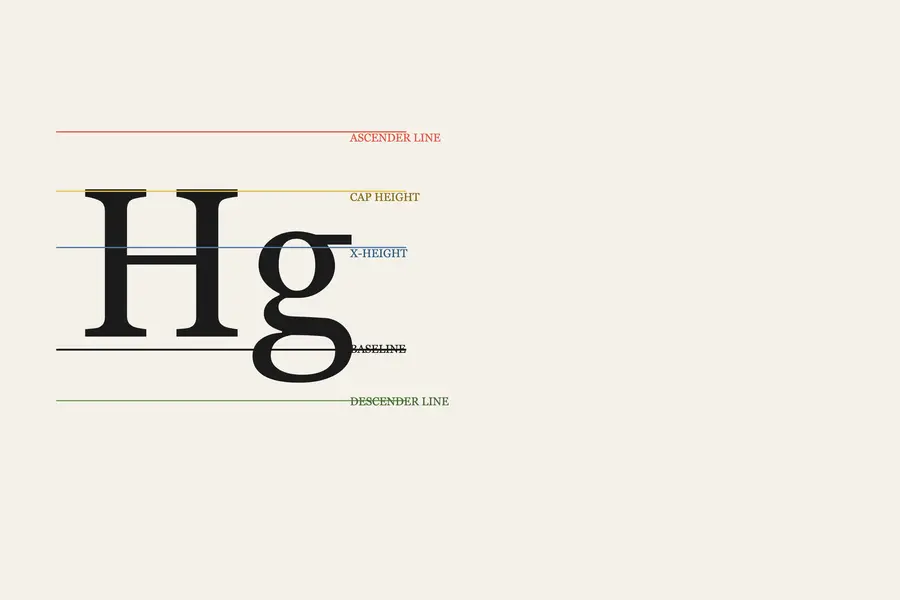
Typography is the craft of shaping and spacing type so readers can recognise its letters and follow its meaning without friction.
Read it
Colour management is the discipline of specifying a colour precisely enough that a printer, a signage vendor and a web team can all reproduce it the same way, then documenting that specification.
Read it
A design system is a governed set of reusable components, patterns and rules that a team uses to build consistent digital products at scale, and it is neither a static style guide nor a component library on its own.
Read it